Tuesday, 9 October 2018

How to create the right kind of campfire

Having a campfire is a big part of camping. But do you know what type of campfire to make?
Don’t believe everything you watch on TV or see in the movies. There are different types of campfire. Some are best for heat and light, others are best for cooking over.

Creating a Campfire for Cooking

Campfire for Cooking
TV shows and films often have a roaring fire with pots and other items cooking over the flames.
Whilst it’s not impossible to cook that way, you’ll usually end up with burnt and undercooked food.
Hot coals and embers are actually much better to cook over as they give out a good steady heat, and it’s easier to control the temperature by adding or taking away hot coals.
Flame tends to burn yet not get that hot, at least not hot enough to cook the inside of your food before it scorches the outside.
If you want to do a lot of campfire cooking for your family, I recommend you get a Dutch Oven (see our article on how to use a Dutch Oven for more info).
Dutch Ovens and other cast iron cookware work really well with hot coals, as the heat from the coals transfers to the iron, making it ideal for frying, baking, and roasting.
Let’s look at a few different types of campfire.

The Tepee Campfire

Tepee Campfire
The Tepee is the classic looking campfire and is ideal when you want to create a quick fire to warm up with.
Pile up dry tinder kindling and set it alight. Then start placing sticks around it in a tepee shape, making sure that you don’t smother the fire.
As the fire gets bigger you can use larger sticks and logs.
This is a good fire that puts out a tall flame and heat in all directions, making it an ideal campfire to sit around in the evening.
You will need plenty of fuel close to hand as this type of fire burns quickly.
However, the tepee campfire is not a good choice if you want to cook food.

The Criss-Cross Campfire

Criss-Cross Campfire
If you want a campfire to cook over, then you need to build a Criss-Cross fire.
You build this by simply placing a criss-cross of logs, stacked on top of one another.
I find it easier to light by creating a small depression in the ground and start a small fire with dry kindling first, then start adding more small twigs to the fire, and then build the crisscrossed logs above the fire.
Although the fire’s shape does provide a flat platform to cook things over, eventually the logs will collapse in on themselves.
This is not a problem, as it’s the hot embers and coals that this sort of fire makes that you then use for cooking with.

The Keyhole Fire Pit – The Best of Both

Keyhole Fire Pit
So what if you want to sit around a campfire and cook? How can you have a good campfire that does both?
Well, the ideal solution is a Keyhole Firepit.
You cut a keyhole shape in the ground and start a Tepee fire in the round part of the keyhole.  This fire provides light and warmth.
Now you can either wait for the Tepee fire to create enough hot embers or start a second fire for cooking with.
If you decide to wait, then rake hot embers from the main fire into the slot where you can cook food.
Alternatively, start a small criss-cross fire in the slot to create some embers while the tepee fire is warming everyone and lighting up the camp.

The Swedish Torch

Swedish Torch Campfire
The Swedish Torch campfire is very popular on the internet. After all, using this design, a single log can burn for hours.  Sounds amazing, right?
The concept is quite simple.
You cut some slits into a log. You stand the log on its end and start a fire in the top. As the fire embers fall into the slits the log starts to burn.
Air is drawn into the slits and the log burns down from the top and the inside.
We’ve created something like this before, and although you can have a log burning for a long time, it doesn’t give out as much heat or light, so a group of you at a campsite won’t be keeping warm by this fire, unlike a tepee fire. Though if there’s just one or two of you and don’t have much wood, the Swedish Torch could be a good choice.
You’ll also want make sure the log is firm. You don’t want it falling over, especially with kids around.
If the top of the log is also flat you could place a small pan or pot on the top and use the log to cook on. The Swedish Torch does put out a lot of heat at the top of the log.
Here’s a video from the internet on making a Swedish Torch campfire.
So there you go, a couple of different methods of creating a campfire.
Here’s a handy summary:

Types of Campfire Pin

Tuesday, 25 September 2018

The 5 Types of Campfire and When to Use Them

The 5 Types of Campfire and When to Use Them

There’s a perfect fire for every situation. Learn to pick the right one.
Jan 3, 2018
Want to learn more basic backpacking skills? Take our Backpacking 101 online courseand get out on the trail.
Nothing says camping quite like a blazing fire. But which type should you build? It depends on the purpose of the fire and the amount of wood you have on hand. Here’s a rundown of the basic types of campfires and what they’re best used for. (As always, use Leave No Trace principles and check local restrictions before you burn.

Image result for best campfire

Teepee

This classic coned-shape structure is named after the Indigenous dwelling it resembles. A wide, circular base allows for ample oxygen flow, so it burns hot. It’s also easy to feed by leaning more sticks against its upright structure. Because this fire consumes wood rapidly and requires constant maintenance, it’s best used as a quick warming fire or for small cooking tasks, like boiling water (wait for the teepee to collapse, then put the pot of water on the coals and add small sticks around the pot to keep the fire going).

Log Cabin

If you’re looking for a fire with a sustained burn that requires minimal effort, the log cabin is the way to go. By stacking thick logs that fall in on one another as they burn, but still leaving space in the center for air to flow, you create a warm fire that burns much slower than the teepee. Building one is easy: Put two logs in your pit parallel to each other, then stack two more on top perpendicular to them. Continue to stack logs to the desired height, then place kindling in the center square and ignite.

Platform (Upside-Down Pyramid)

The platform fire is in the same family as the log cabin, but its main purpose is to cook food. The difference is that the logs are stacked closer together (think sardines in a can instead of a pound sign), and that the fire is started on the top level of the platform, as opposed to the bottom center like the log cabin. By burning it down from the top, the fire creates a solid, flat “platform” of coals upon which you can place your pots and pans to cook. To build it, lay three (or more) logs on the ground, then place three more on top perpendicular to the ones below, and so on, at least three levels high. Then, start the fire at the top.

Star

The star fire was used by western Native American tribes with low supplies of wood. Unlike the other methods, which burn entire logs all at once, the star method works by aligning the ends of a few logs and burning them bit by bit. The result is a fire that burns slow, requires no cutting (logs can be any length), and creates a full flame. Create a small tepee fire with kindling, then lay four or five logs around it, one end in the fire and the other end leading away like the point of a starburst. As the fire goes, nudge the logs further into the center to replace what has been burned. Another benefit of the star fire is that it can be extinguished quickly by pulling the logs away from the center

Lean-To

When it’s windy, you’ll be happy you know the lean-to method, which uses its own wood as a windbreak. To build the simplest version, lay a thick log on the ground and place your tinder beside it, on the leeward side of the wind. Lean small sticks and other kindling against the log at an angle that goes over top of the tinder. When you light the tinder, it will catch the kindling on fire and begin burning the bigger log. Slowly add larger sticks to build up the fire, and add another full-size log when ready.   

Thursday, 20 September 2018

Camping Alone: A Guide to Solo Camping

Camping Alone: A Guide to Solo Camping

Solo camping means camping alone. Many people like engaging in solitary camping because of the unique experience they get from it.
Surprisingly lots of people prefer it to camping with other people. Camping alone can give you peace of mind and self reliance, and it affords you opportunity to reflect on lots of things in your daily life. However if you want to enjoy this type of camping there are some important factors to consider to make the most of your trip and to stay safe.

Solo Camping Checklists

When you want to camp alone, you have to consider a lot of things and the most important among them is safety. When you are camping alone, it means you have to plan for your security, because you are not going to be able to rely on anyone else. You should know there is always the possibility of a mishap and when it happens you may not be able to reach outside help. Here are a list of checks to run through.

Choosing A Camping Shelter

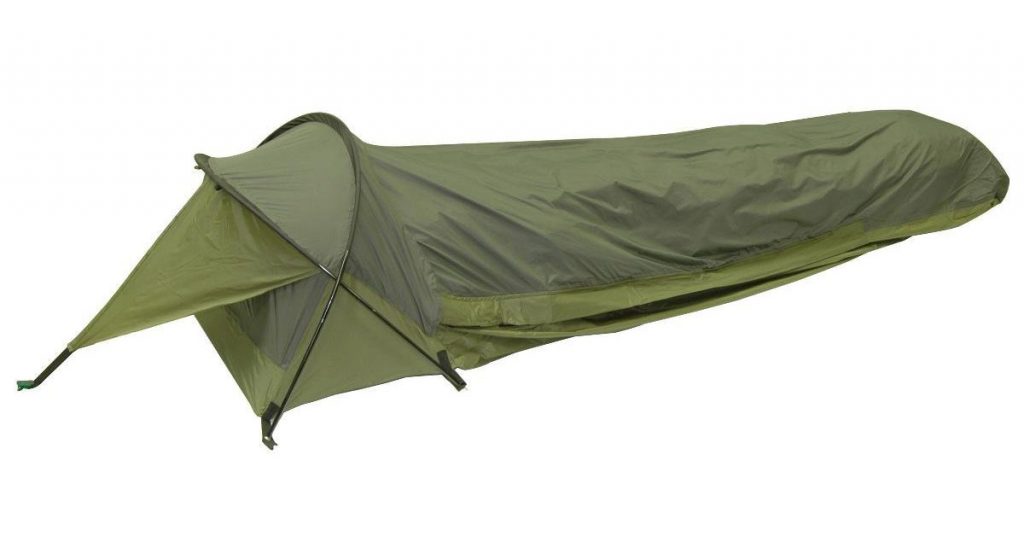
Breathable 1 person bivy sack
It goes without saying that you’re going to need some kind of shelter to sleep in. Something that sleeps 1 to 2 people is likely to be all you need and if you’re backpacking all that you will want to carry. Consider these 1 person tents or if you have a bit more gear go for a 2 person tent. If you really plan on traveling light you could always opt for a bivy sack, or hammock, perhaps with an additional tarp for waterproofing. Whatever you decide upon go for the best you can afford, buy cheap and you’ll buy twice.

You’ll need to be able to setup on your own

When choosing a shelter remember you’ll need to be able to put it up and pack it away on your own. Something large will give you space to move around in but could be awkward to setup.
Smaller tents offer greater flexibility on placement and will be easier to set up when camping alone.

First Aid Kit

At the minimum a simple first aid kit should be the first thing you pack. Should you sustain an injury in the course of the trip you should be able to treat yourself until you are able to get outside help. Plan to be able to treat something from a simple headache to putting a limb in a splint.

Keep basic medicines to hand

When you are camping especially in areas where cell phone reception is limited you should have basic medicines to hand. Saying that if this is your first camping trip alone we’d recommend not going too far off the beaten track. Some of the risks you can be subjected to include bee stings, sun burn, a fall, sprains, basically injury or illness.
There are numerous ready made basic first aid kits available on the market from brands such as Coleman. But don’t just pay your $10 and think job done, take care to really consider what you should include. Consider at least the following;
  • Band Aids / Sticky Bandages
  • Scissors
  • Ibuprofen / headache tablets
  • Insect / mosquito repellent
  • Antibacterial spray or ointment for cuts
  • Sunscreen
  • Lip balm
  • Hand sanitizer
  • Bandages for wounds
  • Sterile pads
  • Medical adhesive tape
  • First aid manual or book
  • Throat lozenges
  • Poison ivy treatment
Plus don’t forget any prescription medicines that you take.

Protective Clothing & Gear

Other than a first aid box to protect yourself from potential injury you could consider protective clothing. You should take serious precaution as you walk. If you walk through the bush consider wearing hand gloves. Footwear should be secured and laced up correctly and ideally should incorporate ankle protection. A sprained ankle on your own miles away from anyone is no fun at all and potentially life threatening.
Clothing wise you should pack for hot and cold to protect yourself against the vagaries of weather. Everything from sunglasses to a rain jacket should be in your back pack.

Food & Drink

If like we recommend, your first camping trip alone is at an established campground, then you should only need to take basic provisions and cooking equipment. This might include snacks and small items to add flavor and seasoning to supplies you purchase at the campsite.

Food for the duration of the trip

If however you plan on venturing further afield and maybe this isn’t your first solo trip then you will need to take a more thorough supply of food and drink. You’ll need to take as much food and drink as you’ll need for the duration of your trip.
You should pack a healthy balance of proteins, carbohydrates, fruit and vegetables plus plenty of fluids. Plus you’ll need the gear to cook and clean with. See this list of pro camping tips to really get ahead of the game.

You’ll need a means of purifying water

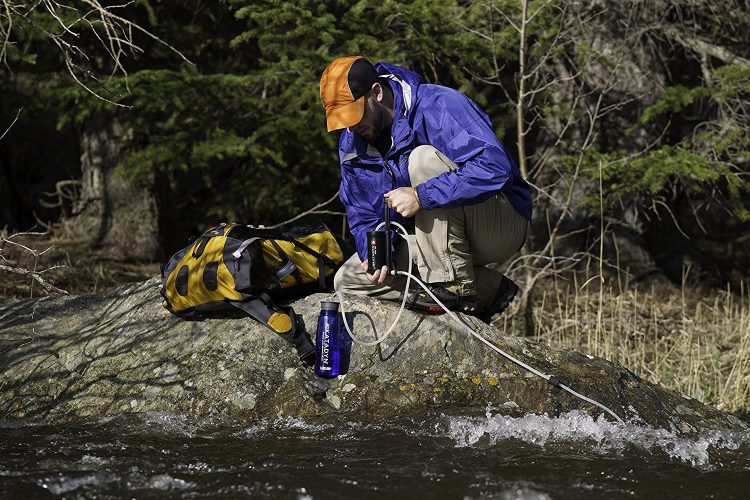
best backpacking water filter in use at the river
Backpacker purifying water beside a stream
If you don’t plan to carry water in a Camelbak or similar you should ensure water purification tablets are part of your kit. Alternatively for around $10 consider a LifeStraw, better still go for a pumping water purification device that can rid dirty water of all contaminants.
At the very least you’ll need the ability to heat and boil water. Undertaking research of the area you plan on camping in, if wild camping, will be time well spent.
A word to the wise consuming alcohol while camping alone in isolation should be avoided. A trip or fall while under the influence could have devastating consequences.

Physical Attack

Although highly unlikely it is an important safety concern to consider the possibility of attack by beast or even from fellow humans. Because of that, you should always beware of large predators, as well as poisonous creatures that can endanger your life. Take care when hiking out alone, don’t be overturning rocks where snakes or dangerous insects could well be. Limit the risks you need to take.

Don’t become a target for an inquisitive bear

In Bear country store foods away from sleeping quarters and in sealed containers. Don’t leave waste hanging around. You may even want to setup a perimeter wire to warn and startle any creature that accidentally crosses your path.
If you are camping in an area where other hikers or backpackers pass by you may want to give the illusion that you’re not alone. Setup 2 places for dinner, hang clothing of the opposite sex from a washing line, you get the idea.

Pre-camping Safety Checks

Even before you set off camping, you should take safety measures to ensure that you are protected. It is in your best interest to inform a couple of people where you plan to go and when you’ll be returning, before you set out on the journey.
If there is a local authority like a local ranger service then you should inform them of your movements, check in and check out. Also take note of any local safety information available.
If you are a lone female camper these precautions are even more vital as unfortunately you are more of a target than a lone male.

Camping Alone Benefits

When you have taken care of the safety issues, you will more likely appreciate the benefits of solitary camping.
  • It makes for self reliance. Perhaps the greatest benefits that you can derive from it is that it will help you develop your self reliance ability. This means that you would no longer depend on other people for this type of activity.
  • A unique experience. There is a peace and tranquility that accompany this type of camping that is unrivaled you will enjoy nature to its fullest.
  • It helps with personal growth. Every individual deserves a unique opportunity for personal growth. Solo camping is the opportunity waiting for you. You are going to grow through introspection.
  • Discover and understand your own limitations. Most importantly, it is going to help you to find out those mental and physical limitations unknown to you and will also reveal inner strengths.
  • Share experiences on your own. You are not going to share anything with anybody. It means that you are going to have things all to yourself.
  • Develop your camping skills. Anytime that you engage in this type of vacation you’re going to have to undertake every activity and chore from lighting the fire, to cooking and cleaning and being prepared for whatever will confront you. This would not have been the case if you were part of a group where tasks are shared.
  • Can enhances your intuition and reasoning ability. Moreover, solitary camping has the capacity to sharpen your intuition. You are going to be curious of any noise and any movement around you you will become used to the sounds and site of potential danger. Overall this can help improve your decision making ability.
  • Flexibility. Solo camping offers the freedom to do what you want and at the time that you want to. Because you are alone, nobody would stand in your way to achieving the happiness and joy you deserve. It offers you the space and freedom to do those things that can please you, and keep you happy.
  • Personal reflection. It is a great opportunity for sober personal reflection. You may need a moment to be alone, perhaps in an isolated place to have a review of things around you and think of how to forge ahead with your life.
If you still like the idea of camping alone then go for it. It is a unique experience that you will either love or hate. Do follow the advice about gear and safety equipment and buy the best possible quality you can afford.

Wild Camping Tips and Kit List

The first rule of Wild Camping club is...  actually really simple! Leave No Trace: if you take it in, you carry it out. What is wild camp...