8 Common Mistakes of Wilderness Survival
1. No Shelter
This is a two fold mistake that will cost you your life in a Wilderness Survival Situation. The first  fold of this mistake is not having a proper shelter with you, the second fold is not having the knowledge to build a shelter from nature’s tools which are all around you. When talking about someone or a group of people who died in the Wilderness there is a common term that you will hear come up, exposure. Whether it is hypothermia or heat stroke, the bottom line is you either did not have shelter (tent, tarp, sleeping bag with bivvy) or you didn’t have the knowledge to build a suitable shelter to shield yourself from the elements. Remember, Staying Dry is the first rule of Survival.
2. Lack of Good Navigation Tools
People who venture into the Wilderness without a map, compass, and GPS are flirting with disaster. Anyone who has spent time in the woods knows that within seconds even the best woodsman can get turned around in thick trees and bushes and begin to walk the wrong way. The key to navigation is having a back up method to find your way to safety, remember “Two is One and One is None” never rely on GPS alone. Having a good understanding of cardinal directions using the Sun and Stars is also beneficial if you are thrown into a situation where prior preparation wasn’t available (plane crash, boat wreck).
3. Poor Knowledge
“Be Prepared” is the motto of the Boy Scouts, unfortunately most people who find themselves in a Wilderness Survival situation have very poor knowledge on how to survival and are usually totally unprepared.
Know the 5 keys to Wilderness Survival
1. Know how to build a shelter
2. Know how to signal for help
3. Know what to eat & how to find it
4. Know how to build and maintain a fire
5. Know how to find water and prepare safe water to drink.
Know the 5 keys to Wilderness Survival
1. Know how to build a shelter
2. Know how to signal for help
3. Know what to eat & how to find it
4. Know how to build and maintain a fire
5. Know how to find water and prepare safe water to drink.
4. Miscalculating the Risk
Most Wilderness Survival situations start off very innocent; like a fishing trip with friends, a day hike on a familiar trail, or a planned father & son hunting trip. Then things go terribly wrong and suddenly you are faced with a life and death scenario. The only thing you can do is plan for the unexpected. Sit down and go through contingencies before you set off on your trip. Once you leave, it is too late. There is an old military saying “Failing to Plan is Planning to Fail.” Make sure you have done this same process with your emergency car kit.
5. The Wrong Clothes
As a rule you should always dress one layer warmer than you need. You can always take stuff off and wrap it around your waist, stuff into your pockets or put it in your backpack if you get hot. But once you leave an article of clothing behind there is nothing worse than being cold knowing that you left your jacket in the closet. Also remember the outdoor sayings about Cotton. (Cotton Kills, Friends don’t let friends wear Cotton, and Cotton is Rotten) Find and wear clothes that retain their warmth even after they become wet. Also have a shell jacket and pants of some kind for rain and snow. Remember, most cases of hypothermia happen in temperatures over 40 degrees Fahrenheit.
6. Getting Drinkable Water
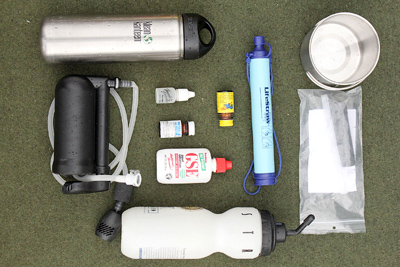
We all know that the human body doesn’t last long without water. The question you have to ask  yourself in a Wilderness Survival situation is “Will this water make me sick?” Waterborne organisms such as cryptosporidium and giardia can cause severe diarrhea and vomiting that increases dehydration and reduces your ability to carry on your other survival efforts such as building shelter, finding food, and signaling for help. On the flip side dehydration will kill you in a matter of days. Without a good supply of pure drinking water, the body can become dehydrated very quickly. Along with dehydration comes poor judgment, loss of energy, and eventually you will lose the will to survive. There are several methods for purifying water (Boiling it, Chemical tablets, & Water Filters) and there are several methods for catching rain water or dew. Learn these strategies and be prepared.
7. No Signal Plan
Being able to signal for help is a key trait in Wilderness Survival. If you go to almost any outdoor store they will have a whole section dedicated to these devices. The most common ones are whistles and signal mirrors but you also have to think about being able to use fire starting devices and high beam flashlights. Other good tools to have are radios, bright clothes, and emergency beacon devices such as ACR or SPOT. If you are caught in a Wilderness Survival situation without any of these tools, have an understanding for creating an emergency signal using rocks, trees, snow, or dirt.
8. Fire
It is only one word but in Wilderness Survival it has many meanings. Warmth: a good fire can keep  you and your loved ones warm in some of the worst conditions. Protection: a strong fire can keep you safe from predators and a long burning stick has scared more than one animal away. Signal: a blazing fire can be seen for miles away at night and the smoke can be seen during the day. Purifier: a hot fire can be used to boil water and keep your drinking water safe. Keep several methods of making a fire with you when traveling in the Wilderness and also learn how to make a fire the old fashion way……with two sticks.