Showing posts with label shelter. Show all posts

Friday, 3 August 2018

Survival Essentials: What Matters Most

What are the most important survival essentials? When you are considering what to bring on a trip or how to prepare for a possible survival situation, it helps to start with the most important gear. Though what you ultimately choose to pack will depend on specific conditions and situations, there are survival essentials that should always be considered.
survival essentials

Survival Essentials:

The Bare Necessities

The four basic needs of nearly all survival situations are shelter, water, fire, and food. The following gear assists with meeting the needs of these four priorities. The order of importance for the following essentials is determined by the the needs of a given situation.
  • Shelter – a light-weight tarp, tent, or extra large rain poncho can provide emergency protection from the wind and rain
  • Insulating Layers – warm layers of wool or synthetic clothing, rain gear, a warm hat, and gloves assist with regulating your body temperature
  • Water Container – having a vessel to transport water is key - metal water bottles can also provide the opportunity to heat water over a fire
  • Water Purification System – a good water filtration pump or purification tablets allow you to have clean drinking water
  • Fire Starting Tools – carrying at least three different ways to make a fire such as a lighter, waterproof matches and a magnesium flint and steel, in a seal-able plastic bag with dry tinder material, will assist in fire-making
  • Food – snack bars or dehydrated food can provide a boost in energy in survival situations
  • Knife – a quality, fixed blade knife is a core tool for numerous survival tasks
  • Navigation Tools – topographical maps and a compass, signal mirror, and gps unit will help you navigate
  • Sun Protection – sunglasses, a wide-brim hat, and sunscreen help protect you from sunburn
  • First Aid Kit – one that includes a variety of supplies such as sterile gauze, antiseptic wipes, adhesive tape, bandages in various sizes, tweezers, safety pins, scissors, benadryl, ibuprofen, and any personal medication you may need will allow you to address most first aid situations
  • Illumination – a flashlight, preferably a headlamp with extra batteries, can allow you to travel or work on survival tasks into the night
  • Miscellaneous Tools – strong rope, a sewing kit, multi-tool, and whistle can assist in many situations

Survival Knowledge

Though these items are great to have prepared and ready to go, the most important survival essentials are your skills and knowledge of how to survive. There are two major ways that survival knowledge is essential: knowing how to effectively use survival gear and having the knowledge to improvise without gear.
Any tools, gear or materials you might have as part of your survival essentials must be used properly in order to serve your needs best. Practice using all of your essentials, and get comfortable with them. Do not leave your gear unopened and unused until a survival situation arises.
Consider this: using a lighter or matches to start a fire in the comfort of your own home is not the same as trying to start one with the same materials while the wind is blowing and the rain is coming down hard. Be sure to practice in all conditions. Similarly, improper use of a water-filtration system can allow contaminants into your drinking water, which could potentially make a survival situation much worse. Understand your gear inside and out.
Again, it is vital that you are familiar with how to utilize all of your essentials and be comfortable using them in a variety of conditions.
What if one or more of your survival essentials are forgotten, become lost or break? What then?

Wilderness Survival Skills

This is where your knowledge of wilderness survival skills becomes essential. If you end up losing your knife, map, compass and fire making tools your challenges may have greatly increased! With some wilderness survival training you could learn how to make a primitive knife, travel using aidless navigation, and make friction fire using wild harvested materials. Then you can manage just fine without the store-bought gear.
Even someone with all the necessary tools for survival can still get into dangerous situations through their lack of knowledge and experience in the outdoors. Practice using all of your essentials under a variety of conditions. Start with the setting most comfortable to you, and practice in increasingly more challenging conditions.
Survival situations demand that you be flexible, adaptable and skilled with utilizing what you have. Resourcefulness is a key to survival, and an attitude of being open to possibilities can be very helpful as well.

Wednesday, 18 July 2018

The 5 Most Important Survival Skills When You’re Lost In The Wilderness

The 5 Most Important Survival Skills When You’re Lost In The Wilderness

Image source: galleryhip.com
You don’t necessarily have to know 200 ways to sharpen a knife, but if you’re new to the art of bushcraft/survival you will want to make sure that you’ve got a few of the basics out of the way prior to your first serious group outing in the backwoods.
This knowledge also is important for any survivalist for the simple fact that it can be useful for anything from a time when you’re lost in the wilderness to a bugout operation when the big one hits. The five following skills are critical areas of study to master before you find yourself in the middle of nowhere.
No. 5: Tracking
The science and art of tracking is basically the study of how to interpret what the land is telling you about recently transpiring events within the immediate vicinity. Whether it’s a fallen tree, a deer track, a human footprint or a broken twig, the land itself tells a story. And you need to learn how to read that story. Trackers are essentially detectives, but without the chalk outlines and paperwork.
Tracking knowledge is not just needed for hunting and trapping. If you know what you’re doing, you’d be able to tell if there’s a nearby human presence (which would be a critical skill during a bugout situation). This is one reason why elite combat units learn tracking – it helps them determine troop strengths and their corresponding movements.
No. 4: Weather
A few years back, I had mulled over the idea of purchasing an altimeter wristwatch. I wanted the slight edge of being able to predict immediate changes in local weather. Let’s face it, knowing what the weather is going to do on any given day would give me a HUGE advantage, especially during a 24/7 post-bugout situation.
Well, it didn’t take me long to realize that I’d have to drop at least $200 to get one that actually worked the way I needed it to. After I spoke with the owner of the hiking store I frequented, he literally said: “Dude, I wouldn’t get one. For why you need it, just learn to study the clouds.”
Image source: survivalbased.com
What a novel thought, right? Needless to say, knowing how to predict the weather while in the field is a huge necessity. But purchasing expensive gear in order to do so is not. If you learn how to interpret signs in the sky, then you’ve just saved yourself a pretty penny on gear you didn’t actually need in the first place.
No. 3: Shelter and Fire
These two topics are probably the most obvious on this list because exposure is one of the biggest killers in the field. If you can’t build a fire then you could be up a creek, especially when the temperatures begin to plummet.
This skill will be your key advantage in everything from signaling for help to cooking your day’s catch. Perhaps the most commonly held requirement in the business is that you should know at least five ways to build a fire, including at least three “primitive” methods.
Having shelter, like having fire, is crucial for staving off hypothermia. If properly built, your shelter should also keep you dry during rainy nights. It’s also a way to keep that sleep-robbing mental boogie man at bay while you’re out there in no man’s land. In order to be prepared, I recommend knowing how to build the basics: a debris hut, lean-to, A-frame, and wickiup are common but time-tested shelters.
No. 2: First Aid
Think about it. If you’re in a survival situation, then how did you probably end up in that predicament in the first place? It’s usually because something unpredictable happened, like capsizing your canoe on the Snake River or flipping your sedan in the Adirondacks. And when people find themselves in these scenarios, injuries are usually an accompanying factor.
If you’re well-studied in first aid, then you’ll know precisely what to do when somebody on your team (or you) is bleeding, has a broken bone, or desperately needs their body’s core temperature increased after a fall into that breathtakingly frigid mountain river.
By the way, having even basic medical knowledge will make you indispensable in a disaster scenario. Your team might just want to do their due diligence in protecting the one guy that knows how to fix a nasty knife wound.
No. 1: Land Navigation
This is my No. 1 for a very, very good reason.
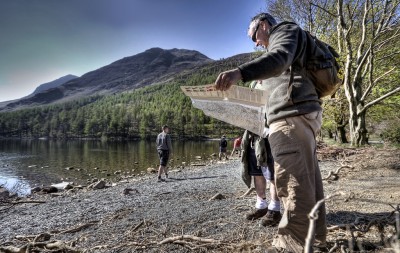
Image source: oars.com
If you’re in a 72-hour survival scenario, and ESPECIALLY if you’re rolling full-steam toward your retreat, then there’s no way you’ll succeed in arriving safely at your intended destination without knowing where you’re going. Quite frankly, if you have no clue how to get around without your GPS, then you might as well have just stayed home in relative safety.
Getting lost could walk you right into hostile situations. It also will increase your bugout time during a very chaotic and dangerous time. And worst of all, you might not even make it to your retreat because you run out of roads to follow. Following a road is easy. Moving from point “A” to “B” over dense, foliage-covered land is not, especially if you have little or no experience in doing so.
In the same way, knowing how to orient yourself after you just wound up on a river bank, soaking wet with all your gear being churned with the rapids could profoundly reduce the time it takes to get you back home.
Let’s Get After It
Getting where you’re going and accomplishing this in a non-bleeding or broken or freezing or dehydrated or lost fashion is always the primary objective. So study up on Google, YouTube or any of the many other resources out there and get prepared.

Monday, 16 July 2018

Six survival skills you should learn now

Six survival skills you should learn now

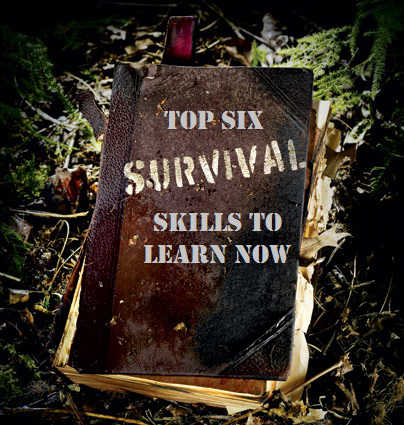
Top six survival skills to learn now
There are a lot of things that you could possibly spend your time on to get yourself ready in case you’re lost in the wilderness while hunting or checking out your bugout route. I debated how many categories I wanted to have but I think I came to a decent compromise. Here are the top six skills you should learn now, before you find yourself in a situation where you need to use them.
They’re not the only skills you need but you have to start somewhere. For example, I left out Navigation. It’s an important skill but not as critical as the ones below. In most cases, you should be sitting still and waiting for help but If I were to make this the Seven Survival Skills you should learn now, I’d put navigation next. On the off chance you really need to be traipsing off into the wilderness, you’ll need to navigate. The problem is that every hour you spend learning how to navigate is an hour you aren’t learning how to keep yourself alive that day. You don’t have an unlimited amount of time, so you have to prioritize things. I’d rather be someone who knows the list below first and then starts working on other things like navigation and plant identification after they get these down. Navigation is an everyday skill that you need when you’re in the wilderness so you don’t need to survive. It’s a survival skill only when you messed something up – like navigating in the first place. Not saying you shouldn’t learn navigation – you should. Just doesn’t do much good to know how to walk your ass out of the woods for three days if you die the first night. Once you have these 6 covered, consider navigation as well as several other skills such as making cordage etc.
That being said, since we don’t know what situation you’re gonna be in, navigation, or any other skill not listed here, may be the most important one to learn to keep you alive someday. You really need to know what you’re prepping for and rebalance as necessary. If you know you’re heading out into somewhere that you may not have rescue coming, you need to pull navigation into your required learning. Or whatever else may be able to help.
Obviously, each of these categories could fill an entire book so I’m just gonna explain why I chose each and give a few examples to get you started.
There are six top skills you should focus on learning. You should also pack your bugout bag and EDC with equipment to help you with each of these skills:
  • Fire

  • Water

  • Shelter

  • Food

  • First aid

  • Signal

Fire

The first survival skill you need to know is how to make a fire. Why? It’s hard to know exactly which skill is the most important in any situation but in general, I think making a fire is the most important. With a fire, you can keep yourself warm, purify water, see in the dark, cook food, signal for help, make tools, sterilize surgical equipment and protect yourself from critters. Having a fire is also a huge psychological advantage. Plus, it’s a manly-mans skill to know.
You should learn at least three ways to start a fire. If you’re heading out to an area and know this in advance, you should learn how the local people use local resources to start fires there. One of the best people to learn this from are native people who’ve been there for hundreds of years. Actually, this goes for all of these skills except maybe signaling for rescue.
A big part of having a fire is actually building your fire site so it’ll not only catch, it’ll stay lit. You need to know the basics of how to build a fire as well as some local materials that you can use for tinder, kindling and fuel wood. If you don’t get this part right, it won’t much matter what you use to try to light it.
The first method you need to learn to build a fire is using whatever gear you bring with you. Hopefully you have a bugout bag or at least an EDC kit. Hopefully you’ll at least have a lighter. A stormproof lighter is a better choice than a regular one because, well, I’m sure you can figure that one out. You should also carry some kind of ferrocerium rod with magnesium that you can flake off. You should always have a cheap 99 cent lighter as a backup because they’re just hella cheap and work in most conditions.
Here’s a video to show you how to use a ferrocerium rod, also called a fire steel:
You need to learn at least two other methods of how to start a fire. Since I don’t know where you’re gonna be when you need to start a fire and your lighter/rod isn’t available, I’d suggest learning how to start a fire with a fire bow and with a hand drill. They’re both a lot of work so go for the lighter if you have one.
How to start a fire with a fire bow.
How to start a fire with a hand drill.
A must-have item in your pack should be a cheap fresnel lens. They’re only a few bucks and about the same size and weight as a piece of paper. I like these so much I did a whole review on them.

Water

The next skill you need to have is how to get water you can drink. Depending on your circumstances, this one may actually be more important than getting a fire. You can go 2-3 days without water but you’ll start degrading long before that. You should be thinking about your water situation as soon as you figure out you’re screwed.
I carry a Sawyer Mini water filter in my bugout bag but I know most people prefer the LifeStraw filter. You should look at both. I even keep a MINI  on my motorcycle as well as in my personal go bag. It’s a handy little thing that doesn’t take up much room.
If you have a fire then boiling your water is usually the best way to make it drinkable. It’s not a 100% solution but it’s pretty close. If you don’t have a container that you can put water in and sit in the fire, heat up rocks and drop them into your water.
If you have a plastic bag, you can collect water from plants.
With a little more work, you can create a solar still, which works off the same principal.

Shelter

If you don’t have a tent with you for some reason, hopefully you at least have a tarp. You really should get a tent though. They’ve come a long way and you can get really nice ones that you can fit on or in a bug out bag now.
In case you don’t have anything, you should at least learn how to make a debris shelter. They cost less effort than most shelters as long as you have something available in the area. They won’t stand up to heavy winds though.

Food

Once you’ve gotten fire, water and shelter, you probably want to be thinking about food. You may be able to go a month without food without dying but in addition to the incredible amount of suck there is without eating for several days, you start losing energy to do things. One of these things is thinking. If you don’t have food in your belly, you’ll eventually start making mistakes a lot more often.
Hopefully you brought some MREs with you or at least some kind of emergency rations. I also keep a small container of olive oil because you can’t beat the amount of calories it packs per ounce and it can be used for other things.
If you don’t have food with you, you’ll have to find some. If you have a river, lake, or ocean around, fish are one of the best foods to go after. Obviously, you can make a hook and may be able to find some kind of line and some bait but a basket is usually a better option. Here’s one way to make one using vines.
For small animals, a snare trap is a great thing to learn because it’s not too difficult, can work if placed in the right spot, and you’ll probably be able to find material for. You need to do it a couple times so you know how each piece works in the system. I’d suggest putting it on a path where you can see small animals go through or making a trail funnel with some logs or stones to force them to go where you want.
You should also become familiar with the plants and animals in whatever area you’re thinking about going into. Plants are the safest and simplest way to eat but you have to know what you’re doing. I don’t care what they taught you about the Universal Edibility Test though, it’s crap. You shouldn’t be eating something if you don’t know what it is.
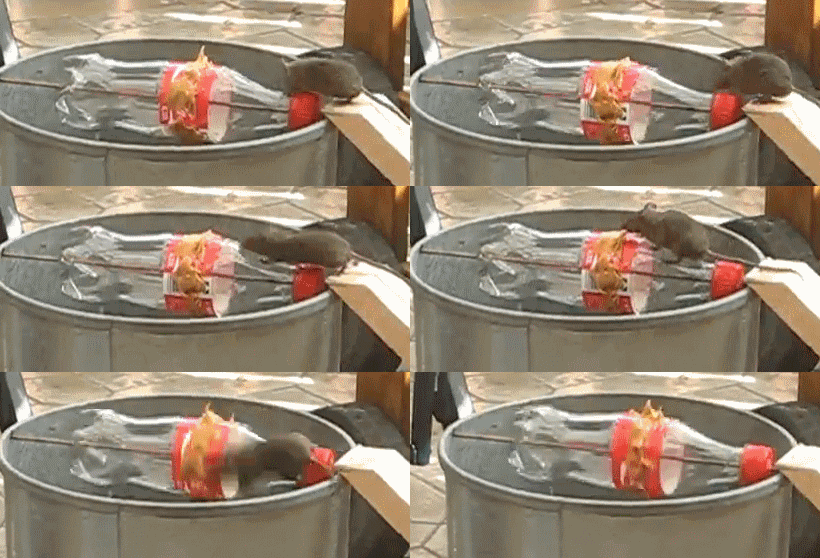
Here’s another pretty simple redneck mousetrap that you can use for more than just mice. I don’t know who originally filmed this gif (let me know if you find out) but it’s pretty much everything you need to know to make one yourself. The concept is pretty simple. Just use what you have available even if you have to dig a pit and put a smooth stick across it with a coke can or something:
redneck mousetrap

First aid


Hopefully you’ve brought along a first aid kit. Even if you did, you still need to know how to use it. I’d suggest getting EMT certified if you can. If you don’t have the time or inclination to do that, at least get good book on survival medicine and study it.
For the most part, you need to know the basics of keeping a wound closed and clean, setting and immobilizing broken bones and identifying/treating for shock, hypothermia and heat exhaustion but you need to learn more if at all possible.

Signal

If you’re stuck out in the wilderness, hopefully you were smart enough to let someone know where you’re going and when to expect you to make contact. Or, you may be out there because your car broke down or your plane crashed. In any of these cases, your best bet is to sit tight and wait for rescue. That doesn’t mean that it’ll be easy to find you, even if they know where to look. You need a way to signal someone passing through that you’re there and need some help.
The big key is to be noticeable. If you can’t stay out in the open, put something out in the open that they’ll notice. Try to use movement, color and shapes that don’t fit in the area. Try to make it unusual. If you’re in the US, do things in groups of threes like three logs laid out in a field or three rocks together. In the UK and the Alps, use six.
Also consider building signaling into your equipment by doing something like sewing a rescue signal panel into the inside of your jacket or have a way to hook it onto the outside of your tent.
If your bag has a ham radio, try 156.8MHz or 2182kHz. You’ll want to save your battery so just pop up on the radio occasionally or if you hear or see anyone. Get as high as possible. The BaoFeng UV-5R is EXTREMELY cheap. It also has frequencies on it that you don’t need a license to use.
Because they use aircraft for search and rescue, it’s a good idea to have a way to communicate with them. A signal mirror is a pretty good thing to have because in the daylight, it’ll allow you to do just that. They don’t take up too much room in your bugout bag and can even fit into your EDC (are you getting the idea yet that you should have an EDC kit and bugout bag already figured out?). By the way, EDC means Every Day Carry. It’s what you have with you at all times during the day that you don’t ever set down.
Here’s an old WWII training video on how to use one.
If you’ve built a fire previously then a signal fire is also a good idea. The key is to have it ready to go when you see or hear someone and have it in a place that they’ll notice.
There are a lot of different things that you can do to prepare for being stranded in the middle of nowhere but the key is to start preparing now. You may not have any equipment you need (but hopefully you at least have a knife, lighter and a flashlight) but with the right knowledge and skill (some of this stuff requires practice), you’ll do fine. If you’re like me, you like to read and research things that you learn. I can only go over so much in an article but a book like SAS Survival Handbook, Revised Edition: For Any Climate, in Any Situation has a LOT of good information in it. It’s the best one I’ve found so far to teach you how to do these things.

Wednesday, 4 July 2018

Survival Shelters: 15 Best Designs and How to Build Them


Prioritize in a survival situation by getting out of the elements

1. Round Lodge

round lodge survival shelter
The Round Lodge
Tim MacWelch
The round lodge is a hybrid from many cultures. Part tipi, part wicki-up, and influenced by many architectural styles, a round lodge can block wind, rain, cold, and sun. It is structured like a tipi, with the addition of a solid doorway. These typically have a smoke hole through the roof, and can accommodate a tiny fire for heat and light. This shelter can be thatched with grass or mats; or it can be buried with a thick coat of leaf litter. Lodge styles like this abounded in the historic and prehistoric American west. This architecture worked equally well in wetter climates, and was used in pre-Roman Britain.

2. Ramada

Ramada shelter
The Ramada
Tim MacWelch
Sunny, hot environments require a shelter that offers shade. The ramada's flat roof doesn't give you leak-proof rain protection, but it does block all of the sun from beating down on you. Many ramada variations exist, but most are based on four posts, some lightweight beams and a suitable covering. Tarps, mats, or even brush will do well enough on the ramada's roof as a sun block. Add some removable walls to cut the evening breeze if temps cool down, and you have a very versatile desert shelter.

3. Quinzhee

quinzhee snow shelter
The Quinzhee
Tim MacWelch
The quinzhee is a dome shaped snow shelter, similar in shape to an igloo, but much easier to construct. Snow must be just right to build an igloo, while most types of snowfall can be packed together for the quinzhee. To build one, start by piling up some moveable gear under a tarp. Backpacks are commonly used for this. Then pile snow over the tarp and gear. Pack the snow down, estimating when it is two feet thick all the way around. Next, insert 12 inch long sticks around the dome. Use 3 or 4 dozen of these guide sticks. Burrow into the side of the quinzhee, and retrieve the tarp and gear. Excavate snow inside the mound until you reach the base of every stick. This will ensure uniform thickness of the dome. Make a fist sized ventilation hole in the roof of the quinzhee.

4. Snow Cave

Snow cave
The Snow Cave
A snow cave may be the only shelter option in areas with deep snow. This is typically the most dangerous shelter to create, as the inhabitants could suffer from low oxygen or even be buried alive in a ceiling collapse. Snow selection is a critical part to the snow caves safe performance. Select a deep, solid snow bank or drift. Dig into the side of it, forming a tunnel into a low spot. This is the "cold well", which is a place where the colder air can fall and collect. Then dig up and over creating a shelf or platform to sleep on. This should be the highest part of the shelter. Dig a small hole about 6 inches in diameter somewhere in the roof for ventilation, especially if you plan on blocking the entrance with a doorway of backpack or big snow chunk.

5. Wedge Tarp

wedge tarp shelter
The Wedge Tarp
Tim MacWelch
This tarp shelter is best suited for windy conditions with a constant prevailing wind direction. The wedge provides an aerodynamic shape which should resist the most biting wind and driving rain. With a minimum of 5 tie down points, the wedge is more secure than most tarps, and it even provides two corners that act as rain catches. To build the wedge tarp shelter, stake down two corners of the tarp into the wind (not opposing corners). Then tie up a line to the center of the opposite side of the tarp. Tie the remaining two corners down toward the ground. Use more cord and a less steep angle for open wings and better ventilation. Tie the last corners down sharply for the best weatherproofing. Place a few rocks or log chunks under the tarp by the first tie downs to create deeper basins to catch water. This shelter is a dwelling and a water harvester in one.

6. Tarp Wing

tarp shelter
The Tarp Wing
Tim MacWelch
This unorthodox tarp configuration is great for rain protection over a large area if you have a large tarp; or it can provide coverage to a smaller area when using smaller tarps. I use a 20 by 40 tarp in this shape over my campfire area when teaching classes. But, I have also camped under one that was 8 by 10 feet. The wing ties up opposing corners of a tarp, two up high and two in lower positions. It can billow like a loose sail in wind, but it works well to keep off both sun and rain.

7. Tarp Burrito

tarp burrito shelter
The Tarp Burrito
Tim MacWelch
The tarp burrito is a low drag shelter featuring zero frills and a 30-second or less set up. Simply lay your tarp in a likely shelter location. Fold one side over, about 1/3 of the way. Then fold again going in the same direction. This makes a roll of tarp with the seam underneath. Tuck one end of the tarp under itself to close it off, and shove your sleeping bag down into the open end. With this configuration, all of the seams are underneath you, pinned down by body weight, except for the door. Let it flop down in stormy weather, or prop it open if the weather is favorable. Just remember that you get what you pay for. With no time spent on ventilation, there will typically be dew or frost inside the burrito from water vapor produced by you during the night, especially if your clothes are damp. This will get your sleeping bag wet in all conditions but the driest.

8. Tarp Tipi

Tarp Tipi
The Tarp Tipi
Tim MacWelch
A bit of rope, some poles and a tarp can give you all you need to build one of the most versatile and mobile shelters that Native Americans have ever employed - the tipi. Traditional tipis were once covered with large hides, then later with canvas. For our purposes, any large fabric will work, from parachute material, to sails, or a tarp. There are many traditions with tipi building, but for a quick field shelter, just call it like you see it. Use rope to bundle a few straight pole together or hook a few forked poles to lock in the first three or four poles. Then place other poles in a circle around the main supports. Pull the tarp or other covering into place, and tie down well. Try to size the framework so that you tarp covers it completely.
Practical tip: Make the tarp come together so that you have a door flap, which can be closed in cold or wet weather; or opened for ventilation and egress.

9. A-Frame Tarp Shelter

A Frame
The A-Frame Tarp Shelter
Tim MacWelch
The A-frame is a tarp design that gives great coverage against rain and wind, when built close to the ground. When suspended higher, it still provides coverage from rain, but it allows more airflow underneath. A-frames go up fast. Once you pick your shelter site, you should have your tarp hung up in 10 minutes or less, leaving plenty of time in the day to accomplish other survival tasks. To get started, suspend a line of cordage between two trees or similar supports. Lay your tarp over the line and tie down all four corners of your tarp. This shelter is a great addition to a tarp hammock or strung up over a springy bough bed. You can even use a poncho as an A-frame tarp shelter.

10. Desert Tarp

desert tarp shelter
The Desert Tarp
Tim MacWelch
This "double roofed" shelter dates back centuries among desert cultures, particularly in northern Africa and the Middle East, but it finally found widespread fame through the last century's military survival training. To get started with this shelter, you'll need two tarps and several dozen feet of rope. Find or dig your own low spot in the ground. Lay one of your tarps out over the low spot and drive each of your stakes at one corner of the tarp. Tie your tarp tightly to the stakes, and then tie the other tarp into place - so that it leaves one foot of air space between the two tarps. You can also fold over a larger tarp to create the two layers. Tie the tops of the four stakes to your four anchors, which can be stakes, rocks, logs or any other strong anchoring object.

11. Tarp Hammock

tarp hammock survival shelter
The Tarp Hammock
Tim MacWelch
This is a quick way to improvise a hammock to get off the ground in wet or bug-infested environments. Use an 8x10 tarp and some ¼ inch braided nylon rope. Start out with one of the long sides of the tarp and roll it up halfway across the entire tarp. Then roll up the other long side to meet the first, so that the whole thing looks like a 10-foot long, two roll bundle. Now, tie a sheet bend securely to each end of the tarp, leaving 15 feet or so of rope on each end to tie to your trees. Select leg-thick or thicker trees about 10 feet apart, and securely tie the end of each rope to a tree, as high as you can reach. Wrap around the tree twice for good grip on the bark, and then use two half hitches, with an extra hitch for added security. Tie to the trees high up to compensate for the settling of the hammock as the knots cinch down. You can tie up another tarp as an "A" frame between the two trees that the hammock hangs from to give yourself a roof.
For buggy locations: Tie a small bit of cloth to each of your hammock lines, and soak it with bug repellent. This should keep some of the bugs from walking the line down into your hammock. For snake and insect proofing, soak the rags in kerosene, but keep any open flames far away from the fuel soaked cloth.

12. Bough Bed

bough bed
The Bough Bed
Tim MacWelch
This is not a shelter by itself, but it makes an outstanding addition to any other shelter type. To make a bough bed, you can use leaves, grass, evergreen boughs, or other plant material. Cedar and pine boughs are common enough in many places, but fir boughs make the softest bed. For the bed frame, roll up two logs, side by side and about 3 feet apart. Make sure they are longer than you are tall. Fill the void between the logs by laying down the boughs, several at a time. Dead, dry leaves or dead grasses can be a great addition if you have them. In snowy conditions, you'll just have to stick with the boughs. Make the mattress so thick that you are at least 6 inches from the frozen ground or snow surface when lying down. Keep adding armloads of boughs or other vegetation if the mattress compresses too much or isn't warm enough.

13. Wicki-Up

wicki-up
The Wicki-Up
Tim MacWelch
The wicki-up is a bit like a small tipi made from poles, brush and vegetation. This shelter can be found across the globe, but has been most frequently documented in the American Southwest. Thicker brush, grass, and leaf coverings along with a steeper roof can make this shelter suitable for climates with occasional rain. A broader, squattier structure covered with light brush can give you a shady, ventilated shelter for hot, dry climates.
Collect several dozen poles, some with forks at the top. Lock a few of these forks together to build a freestanding tripod. Then lay the other poles around to create the tipi frame. Finish with the vegetation layer. If the wicki-up is large enough, and the vegetation covering the roof is wet or green material, it may be safe enough to risk lighting a tiny fire inside.

14. Leaf Hut

leaf hut shelter
The Leaf Hut
Tim MacWelch
The leaf hut is a two-sided, wedge-shaped lean-to with much better weatherproofing and insulating qualities. To build one, select a long, sturdy pole 9 to12 feet long. Prop it up in the fork of a tree; or set it on a rock, stump, or two forked prop sticks. Then, cover the sides of the pole with tree branches to act as ribs. These are placed at an angle along both sides of the ridge pole. Place the ribs close together so that your hut covering won't fall through. Next, heap vegetation over the framework (this can be anything that traps air, including grass, ferns, moss, pine needles, brush, or pine boughs). Two to 3 feet of vegetation covering all sides of the shelter is enough to keep you dry inside. Finally, fill the inside of the hut with a thick pile of vegetation for your bedding.
In case of high winds: A layer of brush, sticks, twigs or branches should be thrown over the whole hut to keep the wind from stripping the vegetation away.

15. Lean-To

lean to shelter
The Lean-To
Tim MacWelch
The lean-to is one of the simplest and most frequently constructed primitive shelters. It can be set up in less than an hour with a variety of materials. This basic, one-sided design will give you a haven from wind and rain that the wilderness might throw at you.
Securely support a long, stout pole between two trees. Cover one side with poles, brush or branches. Then, heap leaves, grasses, palm fronds, or any other vegetation that is available on top. This shelter has two main flaws: 1) it doesn't hold in heat well; 2) If the wind or rain changes direction you'll no longer be sheltered. Think of it as a house with only one wall and half of a roof. It offers little in the way of insulation; and merely deflects wind and reflects the heat of the nearby fire.
On the upside, it's quick and easy to build.
Don't forget: Natural shelters like this are difficult to see from a distance, so hang up something bright like a flag to mark the shelter.

Wild Camping Tips and Kit List

The first rule of Wild Camping club is...  actually really simple! Leave No Trace: if you take it in, you carry it out. What is wild camp...