Showing posts with label camping. Show all posts

Thursday, 6 September 2018

Hammocks Vs Tents – The Battle Begins

The idea of hammock camping used to scare me.
Sleeping overnight in a suspended cocoon seemed like too vulnerable of an undertaking in the outdoors. In a hammock, I felt like a perfectly packaged burrito, an easy-access menu item for all passing bears
For the longest time, I could not understand why someone would give up a perfectly good tent for a nylon swing.
I refused to accept hammocking as an alternative to tent camping.
But as I read more and more life-changing stories from tent camping converts, the more intrigued I became.
Hammock vs tent camping.
After much encouragement from friends, I decided to give hammock camping a go and I’m so glad that I did.  

The Fear Of​​​​ Failing

“How was that first night of sleeping in a hammock?’ you may ask. Well, it was terrible. 
I woke up cold, wet, stiff and uncomfortable. But since I survived and wasn’t wet from any bear drool, I decided to try again the next night and learned something very important: Your first time camping in a hammock is miserable. The second time is life changing.
Nowadays, that’s what I always tell folks curious about this lifestyle, and the more people I talk to, the more convinced I am that this is true.
I say that your first time hammock camping probably won’t be fun, because without the proper skills and accessories, nothing in the backcountry ever is. 
Remember the first night you spent sleeping in a tent? It probably wasn’t perfect.
  • Maybe it rained and the entire vestibule flooded.
  • Maybe you didn’t set it up properly and the entire structure collapsed.
  • Maybe your hips bruised from that one incessant rock that buried into your side all night.
  • Maybe you slept on an incline and all the blood rushed to your head as soon as you tried to go to sleep.
  • Maybe you woke up to see the shadow of critters licking the dew off the fabric and nearly peed yourself.
It’s easy to forget that every new activity will have its learning curve. 
At one point in your life, tent camping was not fun. But you tried again, with newly learned skill and accessories. Now, on flat, dry ground with tent stakes, a footprint, a rain-fly and sleeping pad, you were ready for anything.  
Never let your fear of failing stop you from having the best night’s sleep of your life.

Overcoming The Learning Curve

Fortunately, we live in an era of instant-access information.
While my first time camping in a hammock was not fun, I could have made it much easier on myself had I attempted to read any sort of tips or instructions beforehand.
Hammock camping.
If you’re reading this, hopefully you’re less stubborn than I and more receptive to learning things the easy way.
Over the years, I’ve developed an arsenal of tips and tricks to having the ultimate hammock camping experience.
You can read a full guide here

IN SHORT, WHAT ARE THE RULES?

  • Check the weather beforehand and pack accordingly
  • Choose two trees that are 13-17' apart
  • Choose strong, healthy trees with a trunk diameter of at least 6''
  • Position your body ad a diagonal in the hammock to avoid folding in half like a sandwich
  • An accessorized hammocks is a happy hammock
  • Don't forget to breathe

Is Hammock Camping Worth It?

Now, I’ve explained that hammock camping can be just an enjoyable as tent camping. But is it really worth it to buy a whole new package of gear?
Are there any benefits to sleeping in hammock that make it better than tent camping?
Yes.
Once you learn all the little tricks and skills necessary to sleeping in a hammock, you won’t go back to your tent again. Here is why:

PRICE, SIZE AND WEIGHT

A good tent can cost anywhere from $200 to $500 without accessories. By contrast, you can find a high-quality backpacking hammock for just under $60
Your typical tent set-up will weigh 2 lbs at the very least. Most hammocks can fit in the palm of your hand and will weigh at the most, 2 lbs
A tent requires many accessories, no matter how or where you intend to camp. You need poles, a rain-fly, a sleeping pad, stakes, vestibule and footprint. A hammock will only require a suspension system to go with it, making it not only easier to pack but cheaper as well. 

FINDING A CAMPSITE

Finding a campsite.
A good campsite, according to Leave No Trace principles, is found and not made.
But finding a campsite that will fit a 7x4 dimension tent is not always easy.
The ground must be flat, impacted, durable, comfortable, well sized and away from any water sources. You can’t camp in active wildlife habitats. You don’t want to park yourself next to a snake hole.
And you definitely won’t enjoy discovering it’s a flood plain at 2 in the morning. 
In the backcountry, finding an ideal tent camping spot can take an hour.
Compare that experience to the process of hanging a hammock. All you are really looking for here are strong, durable trees. 
Never let the terrain dictate your camping experience. 

SETTING UP YOUR CAMPSITE  

Have you ever hosted or viewed a tent set-up race? It’s intense, pun intended, and yes, an actual thing.
Campers race to see who can set up their tent the fastest. Poles are swinging every which way. People are scrambling. Nylon is flying around in the wind. 
The world record for erecting a 4-man tent with a team of 10, according to these guys, is 1 minute and 58 seconds.
That’s twice the time it typically takes me to set up my hammock by myself. The numbers speak for themselves. 

COMFORT

So, you think you have the perfect tent campsite. It seems relatively flat, comfortable enough and impacted. Exhausted, you set up your structure and crawl in to go to sleep. 
Lying down, however, you now realize that you’re parked on a small incline. 
You roll to the edge of the tent and get stuck there.
How did you not notice that massive boulder that is now digging into your spine? Why is that one part of the tent sagging so much? How is the vestibule flapping so much in the wind?
Moving your tent would be too much of a pain in the ass, so you choose to deal with it. Frustrated, you toss and turn all night. You never sleep. The site was too good to be true. 
Compare that experience to sleeping in a hammock, which is actually much better for your physical and mental health.
Two men in comfortable hammocks.
In a hammock, your body is naturally cocooned into the biologically ideal sleeping position. There are no uncomfortable rocks or pressure points to worry about. 
More and more research and literature suggests that hammock sleeping is the best form of sleep.
Scientists over at the University of Geneva have found that we are able to sleep much deeper in a hammock than even in our regular bed. This is thanks to that gentle rocking sensation that reminds us so much of our crib days.
Have you ever actually tried to stay awake in a hammock? My record is around 4 minutes. 

BEST STARGAZING EVER

When I think of camping, I think of two quintessential activities – s’more making and stargazing.
Feeling small and insignificant in this massive universe is one of the best parts of heading out in the backcountry and getting in touch with nature.
But unless you own a mesh-topped tent, falling asleep under the stars is probably out of the question. 
From a hammock, you never need to worry about this problem again. No experience compares to that of swaying under the trees and stars in the middle of nowhere. 

Combating The Weather & Outfitting Your Hammock

Bug net on a hammock.
If you’re not convinced by the functionality and convenience of a hammock, now consider the versatility and customization opportunities.
In today’s age, a hammock can be outfitted with pretty much everything that a tent can.
Some accessories can even transform your hammock into a tent in the sky. Keep all the functions of a real-life tent, with the ergonomics and comforts of a hammock. 
Some of these accessories include a rain-fly, bug-net, underquilt, overquilt, tarp, sleeping bag and sleeping pad. 
Depending on your needs, you may only want or need a few of these items.
You can find a full list of descriptions and instructions here on your hammock camping guide. 

But What About Winter Camping?

The biggest complaint we ever receive about hammock camping is Cold-Butt Syndrome.
Due to the natural curvature of a hammock and air circulation underneath, our bum tends to get chilly quickly.
Even if you add a sleeping bag to the mix, it may not even help. 
It’s easy to convert your hammock into a four-season camping structure.
There are over and underquilts designed to fasten to hammocks to resolve this exact issue. With an underquilt, you no longer need to worry about ineffective sleeping bag insulation, as the quilt is designed to effectively seal heat in and wick away moisture. 
You officially have no excuse not to give it a go. 

What Do You Have To Lose?

More and more research is suggesting the power of a hammock bound snooze.
It’s better for our backs, our brains and our health.
Hammocks allow us to sleep deeper than we would normally, making it not just a good tent replacement but also a valuable activity for your everyday routine.
If you’re intrigued but not quite ready to take the plunge, we understand. 
Two people in a hammock.
It’s fair to take it slow.
Next time you go camping, set up both your tent and hammock. Start out the evening in the hammock. If it doesn’t work out, you’ll have a safe and familiar back-up plan. 
As far as we know, no one has ever been eaten by a bear burrito-style from the comfort of their hammock. 

Tuesday, 5 June 2018

Survival Skills To Teach Your Kids During Summer Break

School days are winding down, so now is the time to start making summer plans to keep kids busy. So why not teach them some survival skills?

survival skills to teach your kids during summer break
With summer quickly approaching, you are probably already starting to think of things to keep them busy and entertained during the summer.
You are probably like me and don’t want them glued to a TV or playing some video game for hours on end.
You probably want them to learn, explore and get off their butts and do something. Well I have the perfect solution for you: Teach them some survival skills.
Most of these are important lessons that younger generations are not learning anymore, which is a crying shame if you ask me.
Some of these suggestion could even possibly be skills that they find they enjoy and pursue that as a career one day.
And since they are out of school and they don’t have to worry with homework and studying, this will be the perfect time to get out and do some of these survival projects and learn some skills that one day may save their lives.

Activities To Do During The Summer

Go Camping – Camping is a great family fun way to enjoy each other’s company while your kids are inadvertently learning great survival skills and learning how to live in the wilderness if need be when the SHTF.
Go Off Grid – This is great for older kids, teens, and adults especially. Have a whole day with no cell phones, no internet, no TV, and even no electricity. Don’t order out and sleep through the whole day either. Try to play games and come up with dinner without power. This is a good way for kids to learn that they can live without all those electronics. Also, try incorporating this with your camping trip for an even better learning experience.
Go Over What To Do In A Disaster – Write out plans of what to do in different disasters. Remember to add details like what to do if you are home and where you should meet up with other family members. Also remember natural disasters like hurricanes and tornadoes.
Build A Basic Shelter – Teach your kids how to make a shelter using sticks, grass, paracord and other materials. They will love having a little ‘fort’ to play in for a while.
Learn To Store & Preserve Foods – Make your own jams and jellies, ketchups and BBQ sauces by canning them together. Kids will love to try their very own condiments. Teach them how to properly store food and water.
Read Children’s Survival Books – This will improve their knowledge about what needs to be done in a crisis. It’ll help prepare them for when the SHTF.
Plant A Small Garden – Heck, it doesn’t need to even be a garden. Just plant a vegetables in a planter if you want. Teach them to know when it needs watering and how to know it is ready to be picked.
Make Your Own Bug Out Bags – Skim through this list for items you may need for your bug out bags. If you already have a bug out bag go through it to test and check everything like flashlights and other battery powered items and check clothing items you have to make sure it still works, fits and etc.
Practice Some Archery – Build a bow or buy a bow and some arrows and have at it. Teach your kids how to aim and focus on the target. Always have someone to  supervise though!
Build Food Buckets – They will get a kick out of making these survival buckets.
Go Fishing – Going to the lake or pond and fishing is the ultimate way to start the summer. Older kids may like to try survival fishing with some fishing line and a hook. Get them to try to find something to make a fishing pole like a stick or a tree limb. Younger kids can be taught how to tie knots and flip over rocks to find worms and bugs for tackle. Try to teach them to feel when they get a nibble since in a survival situation you are more than likely not going to have a bobber.
Get Water From Trees – They will love to see a demonstration about how to get water out of a tree. Here’s a handy guide that will show them.

Final Thoughts

These are just a few things you can do with your kids during the summer to teach and prepare them for disasters.
A lot of these are skills that they should learn anyways but this is doing it in a fun exciting way to keep their attention and teach them without them knowing. Make it fun and exciting.

Thursday, 17 May 2018

How To Avoid Midges, Wasps And Other Insects While Camping


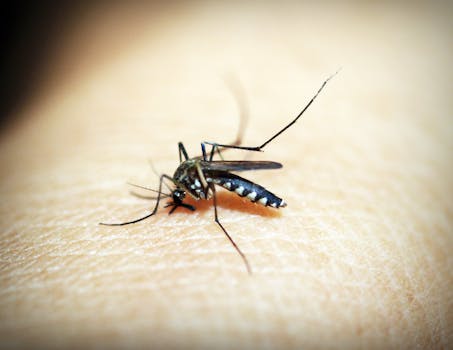
Free stock photo of animal, black, insect, macro
It is easy to be put off by the thought of annoying insects invading your camping space and causing irritating bites and stings. Ultimately though, insects are part of camping and outdoor life and there is no way to avoid them completely.
However, there is a huge amount you can do to minimise their impact - both in terms of your behaviour and products that will help.
Below you will find tips on where to camp, equipment you can use to avoid insects, clothing which will prevent insect bites and stings, and natural and chemical insect repellents. We've also put together advice for dealing with the specific insects and bugs that you may come across during your camping trip.

General advice on how to avoid insects and bugs

Avoid camping in wet or damp areas

Some areas are better than others for avoiding insects and bugs. Wet and damp low-lying areas are often havens for all sorts of insects. It is especially advisable to not camp near stagnant water or wet grassy areas, and to always try to camp a little uphill to make sure your campsite is well drained.
Despite waterside pitches making for very picturesque spots, it's also a good idea to set up camp a reasonable distance from a river bank or lake shore.

Wear suitable clothing to avoid stings and bites

One of the most effective means of stopping biting insects getting to your skin is to wear long-sleeved shirts and long trousers. Even more so if you treat your clothing with insect repellent, especially around the openings at your neck, ankles and wrists.
You can actually buy clothing that has already been treated, but there are special sprays or soaking treatments available for your own gear. Using the same repellent you use on your skin will work fine in most cases.

Keep insects out of your tent

It is important to keep bugs and insects out of your tent completely. Rule number one is to keep the inner doors shut at all times. This means shutting the door immediately behind you every time you go in or out of the tent, even if you just pop in to grab something.
No matter how much hassle this seems, it will be worth it! Far worse to have to spend the night with a mosquito in your tent or waking up to find a millipede crawling over your face!
If your tent does not have an inner mesh compartment, mosquito nets can be used inside your tent, over your bed or to protect your face. Some nets come treated with chemical repellents for extra protection. There are also free-standing net tents which can be handy for protecting babies and children from bugs while providing a place for them to play outside.

Keep food sealed and dispose of rubbish properly

Food attracts all kinds of unwanted guests, so keep all your supplies sealed and covered. Use containers, zip lock bags, cool boxes and anything else that will ensure your food is sealed from insects. It might be worth keeping some food away from your tent altogether, such as in the boot of your car.
Use a rubbish container that has a lid (rather than just an open plastic bag or container) and dispose of your rubbish in the enclosed bins provided by your campsite every night before going to bed.

Preventing insect bites using chemical insect repellents

One of the most common ways of preventing insect bites is through the use of repellents applied to the skin. When it comes to chemical insect repellents, the most effective and widespread active ingredient used these days is DEET (N,N-diethyl-meta-toluamide).
DEET is a very strong and hazardous chemical that can cause health problems as a result of long-term exposure, but it is highly effective against insects, particularly mosquitoes. Using insect repellents containing DEET is considered safe as long as you make sure you follow the directions on the insect repellent, don't put too much on and when it is no longer required, wash it off with water and soap.
Different insect repellents come with different DEET concentrations, usually as a percentage, so if you are particularly worried about the effects you may want to choose one with a lower concentration. It is a balancing act - higher concentrations are more effective when it comes to repelling insects, last longer on your skin and therefore need to be applied less frequently. In the UK repellents containing around 20% DEET should be adequate.

Preventing insect bites using natural repellents

If you don't want to use a chemical repellent, you can try one of the many natural methods that are available, such as applying lavender oil or citronella oil to the skin. You can rub it into edges of tent flaps, a few drops on light bulbs and a bit on your clothing should work wonders, too. There are lots of natural insect repellents on the market and you can also make your own at home using a variety of ingredients that aren't difficult to get hold of. Avon Skin So Soft dry oil with citronella is legendary among campers and many people swear by it. Alfresco products are also popular.
If you don't want to apply anything directly to your skin (or want to team up skin repellent with other means of keeping insects at bay) there are wristbands and ankle-bands that contain natural repellents and chemical repellents.

Have a campfire and burn coils or candles

Smoke is a natural insect repellent and you can burn sage or citronella leaves for extra help keeping insects away.
There are lots of coils, candles and oils on the market and you can find both chemical and natural versions. Mosquito coils and citronella candles can be very effective if the wind isn't too strong.

Avoid wearing fragrances

When you are camping it is a good idea not to wear any perfume, fragranced deodorants, body lotions or other skin products that have a discernible fragrance. This is because perfumes can both attract insects and make insect repellents less effective.

Using lights while camping

Bugs get a buzz about bright lights so if you are using lanterns or other bright lights, try to keep them on the perimeter of your pitch. That way, they'll shed enough light without encouraging insects to explore your camping spot.
Placing a light a little way from your tent is a good way to attract insects out of your tent before you go to sleep if you have forgotten to shut the door.

Dealing with specific insects and creepy crawlies

How to keep wasps away

Wasps are highly efficient at detecting food from far away, especially sugary foods, so make sure you only bring food out when you are ready to start preparing or eating it. Otherwise, keep it in sealed containers and dispose of rubbish quickly.
Wasps love sugary substances but you can use this to your advantage if they start to become a problem by creating a wasp trap.
Cut a plastic bottle in half and put a sugary liquid (such as a fizzy drink or a dollop of jam and water) in the bottom half. Next place the top half of the bottle upside down inside the bottom half and tape it in place (so you have a funnel for the wasps to fall down). (Put the trap away from your camp or you'll just end up attracting them to you!)
Wasps will be attracted to the sweet substance but won't be able to escape the bottle once they climb inside and will eventually fall down and drown in the liquid.
Another more ethical method for deterring wasps is to make a fake wasp nest by stuffing a brown paper bag full of paper and then tying a string round it and hanging it up at your campsite. Wasps can mistake the bag for a rival wasp nest and steer clear of your camp.

How to keep mosquitoes away

Mosquitoes are one of the most aggravating insects you can encounter during a camping trip due to their painful and itchy bites and the horrible whining noise that can be heard whenever they come near your ear.
They are attracted by body heat, the carbon dioxide we breathe out and chemicals like lactic acid in our sweat. They're also most active at dusk and dawn, so you need to be more vigilant at these times to avoid getting bitten.
As with other insects, mosquitoes lay their eggs in stagnant water, so you should avoid setting up camp near these types of areas.
In order to keep mosquitoes at bay, wear long sleeved tops and trousers, especially at dusk and dawn. Use insect repellents and mosquito nets if your tent doesn't have one built in. Burning mosquito and citronella coils or candles can help keep them away in the evenings, and DEET is known to be a very effective deterrent.
If you do get bitten by a mosquito, try not to scratch the bite which will make the itching worse and might lead to infection. There are lots of creams on the market and many natural remedies that can help with the itching.

How to keep midges away

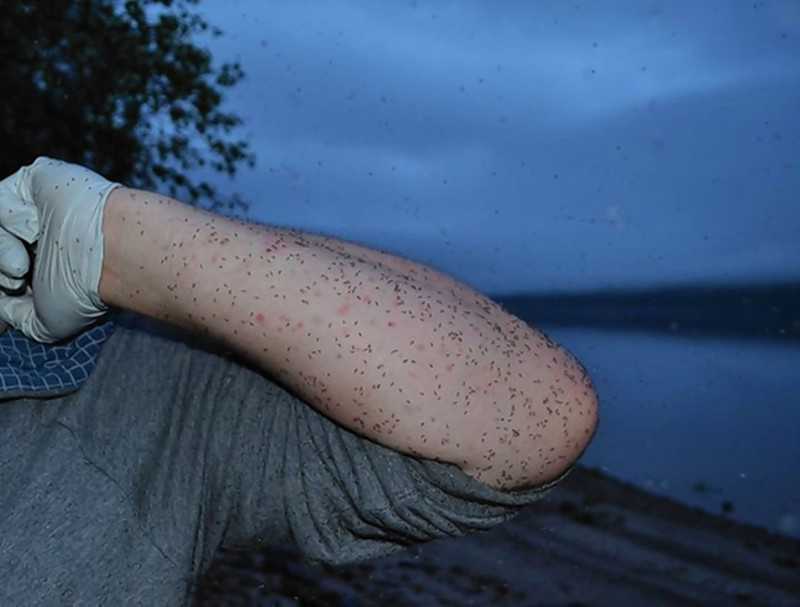
Midges are tiny - just 1mm long and 2-3mm across - but anyone who has ever been camping in Scotland in the summer will know what a pain they can be. You know it's an issue when a midge forecast exists, while biting midge expert Dr Alison Blackwell recently estimated that there were as many as 21 billion biting females in the Highlands and Islands each season!
For Scotland at least, generally you'll have an easier time on the east coast. Swarms of Scottish midges are a particular problem in the Highlands and Western Scotland during warmer months, where damp and humid conditions provide perfect breeding grounds. Midge season gets going in May and peaks in August, whereas cooler months are much less of an issue and therefore perhaps the best time of year to visit midge prone areas.
It's not just a Scottish problem though - midges can be found all over the UK. Believe it or not, there are nearly 40 midge species in Scotland, though only a handful that bite humans:
  • In the Highlands, almost all bites (perhaps 90%) are from Culicoides Impunctatus - the Highland Midge or Scottish Biting Midge.
  • Another biter is the Culicoides Halophilus midge (Coastal Midge) which can be found in salt marshes on the Scottish coast.
  • Culicoides Nubeculosus midges (Farm Midge) occasionally bite humans, but are generally more interested in farm animals.
  • Culicoides Obsoletus midges (Garden Midge) are more common in town and around the lowlands. Their bites are much less painful, but they are still persistent!
Knowing how to keep these girls (and it's only the females that are the issue - male midges feed on nectar and other natural sugars) away can make a big difference to your camping trip.
As it happens, knowing how to avoid mosquitoes will put you in good stead for avoiding midges too. Like mosquitoes, they are attracted to carbon dioxide (detecting it in your breath from a distance of 200 metres!), sweat and certain scents our bodies give off - and they are also most prevalent at dusk and dawn.
They like damp areas such as boggy bits of ground as well as lake and river edges, and they frequent areas under trees or with dense foliage, so stay away from these areas when choosing where to pitch camp.
So what keeps midges away? How can you stop them biting you?
Unfortunately, some people just seem to attract bites more than others. If you're particularly badly affected it might be worth avoiding hotspots altogether, or certainly wearing a midge hood on warm evenings after rain! Strangely they also tend to prefer darker clothing to light, so covering up in whites makes a big difference.
Fortunately midges don't do well with wind speeds greater than that of a breeze (6 mph or so), so picking a camping spot that is exposed to wind will help keep midges away. If there is a slight breeze, it's also worth facing your tent into the wind, as midges will shelter behind your tent for protection and you won't open your tent into a faceful of them!
They also can't fly as fast as you can walk, so if you encounter a midge cloud, the best thing you go do is keep going.
Midge repellents have got more effective in recent years too, with Smidge (the same company who produce the forecast) perhaps the most popular way of keeping midges away. You'll see lots of "does Smidge work" type articles on Google - and reports are normally positive for UK biters. Avon Skin So Soft (available cheaply on Amazon) is popular too, even with the Royal Marines and SAS if claims are to be believed. The price compares very well to more traditional insect repellents - and it even smells nice!
There are also repellents that can work in a small area, create no smells and don't require an hook up to electricity such as the Thermacell repeller
Campfires, coils and candles such as those from Purple Turtle can help get rid of midges too, but they're not a replacement for repellents.
So to summarise, here are our top tips for how to avoid midge bites:
  • Cover up exposed skin as far as possible with white and light coloured clothing
  • Use Smidge or Lifesystems Natural repellents (products containing Icaridin or Citriodiol)
  • Pitch camp in more exposed and breezy areas, facing your tent into the wind. Avoid any damp and boggy areas, or those with dense foliage
  • Have a campfire if allowed
  • Use the midge forecast to avoid midge season altogether if you are particularly badly affected by bites (or invest in a midge hood and try to avoid dusk in summer after rain!)
  • Stay somewhere with a MidgeMagnet or similar device which gets rid of midges
If you are bitten, an anti-histamine cream is again your best bet - and like mosquito bites, scratching will only make it worse.
Scottish Midges
(Credit: Scottish Midge Forecast)

How to avoid ticks

The best way to prevent tick bites is by using insect-repellent containing Permethrin or DEET. Ticks live in long grass and tall or dense vegetation, so you need to be vigilant if camping or walking through these types of areas. Regular scans of your clothing and body will help make sure a tick hasn't managed to latch on to you, as will wearing long-sleeved shirts and long trousers.
Light coloured clothing makes it easier to spot and brush off ticks before they can attach to your skin.
If you are in an area where you suspect or know there to be ticks, block off the gap at your ankle by stuffing your trouser leg bottoms into your socks. A spot of duct tape creates the ultimate barrier!
If you are bitten by a tick, you need to remove it as soon as possible. Using some fine tipped tweezers you should grasp the tick head as close to the skin as possible and pull firmly upwards, without jerking or twisting. Do not squeeze the tick's body as this increases the chance of infection. Do not use petroleum jelly or attempt to burn the tick off. There are special tools that you can get for removing ticks if you're squeamish.
You need to keep an eye on the site of the tick bite for a month after removing the tick, checking for signs of increased redness or a rash. Ticks can carry a bacterial infection called Lyme disease and, although infection is rare, it is important it is treated quickly if it does occur.

How to keep ants away

Ants are attracted to food so, as with other insects, the best thing you can do to avoid ants when camping is to keep your food in sealed containers and to clean up quickly after cooking and eating, including any spillages.
It's unlikely that you'll have a serious problem with ants when camping in the UK, but it will help to set up your camping area away from overhanging vegetation, nearby bushes and hedges.

How to avoid slugs

Slugs are not usually an issue when camping, but very occasionally you might get an onslaught of them when wild camping or camping in a field.
If you are experiencing problems with slugs, consider setting up a beer trap. This is easy to make by simply pouring beer into a container such as a plastic cup or glass jar and partially burying it. The slugs will be attracted to the beer and will fall into the container when attempting to enter it and subsequently drown.

Best insect repellents

Insect repellents aren't necessarily a 'one size fits all' kind of product - sometimes different products work for different people. That said, once you've covered up as much as you can, here are some of the best repellents that we hear consistently good things about (effective on midges, mosquitoes, horse flies, sand flies and ticks):
  • Smidge (contains Icaridin)
  • Avon Skin So Soft (contains Citronellol)
  • Lifesystems Natural (contains Citriodiol)
  • Alfresco (pregnancy safe)
Notice that none of these products contain DEET, which although effective, isn't very skin or clothing friendly and would probably be overkill in the UK.
To get technical for a moment, DEET has been around since the 1940s whereas Icaridin and Citriodiol (the latter considered the less toxic of the two) are newer products which works in a similar way - by blocking the insect's olfactory receptors, preventing them from detecting odours.
If you are pregnant and concerned about using any repellents (no DEET, obviously), Alfresco is recommended by Pregnancy Magazine. However, adding extra garlic to your diet for a week or so before your trip does seem to work for some people!
Reapply your repellent regularly and, when the sun is shining, let your suncream sink in for 10 minutes beforehand. Avoid using perfume which can limit effectiveness too.
Bugs and insects can be very annoying on a camping trip, but with this advice, hopefully you'll have a great camping trip without any unwanted guests spoiling your fun. Remember to keep your tent zipped up at all times too!

Wild Camping Tips and Kit List

The first rule of Wild Camping club is...  actually really simple! Leave No Trace: if you take it in, you carry it out. What is wild camp...