Showing posts with label where to camp. Show all posts

Tuesday, 10 April 2018

Your First Wild Camp 4 – Those little essential extras and Where to camp..

Those little essential extras!
These aren’t as interesting or obvious as the rest of the gear, but just as important. These are the little things that if overlooked can cause more hassle than you’d imagine. Get these sorted and then you’re about ready. Of course, you’ll need all the stuff you take on a day walk in the area remembering that it gets colder at night, plus a few items of spare clothing. I usually take a spare base layer, pants and socks but you might want to double up on these, and just my waterproofs, ultralight windproof, a fleece and a down top. A hat of some sort is useful all year round, and gloves for all but the warmer evenings.
Anything with batteries will need spares. Lithium batteries are lighter than conventional ones and are the best option in the cold when other batteries will die of cold. You may consider a solar charger for your mobile, mp3 player or to recharge batteries.
First aid/repair kit. You’ll need a few bandages and plasters, but don’t take a load of stuff unless you know what it’s for! I find that some painkillers and antacid tablets useful as well (and unlike the plasters, likely to be used). Some cream for bites is useful as is a bag of talc that you can fit your foot into. After a long walk when your feet are sore and hot, you’ll understand! Depending on time of year, a midge net is light but essential. Antibacterial gel is useful and can save you from a dodgy stomach, not pleasant in the wilds. Spare laces might be useful, or some spare guyline. Finally some needle and strong thread, gaffer/duck tape and a few assorted cable ties mean that you’ll be more inventive than McGyver. Some basic toiletries – soap, toothbrush and toothpaste should be enough, depending how long you’re going to be in the wilds. A small microfibre towel is worth carrying as well. You’re probably better off growing a beard rather than taking shaving stuff, and that goes for the men too.
You’ll also need a torch (for obvious reasons) and some sort of entertainment won’t go amiss. I take a tiny MP3 player that lasts for days on end. Audio books are useful, real books too heavy but a luxury you might want. You can use a mobile for all these functions if you don’t want to carry too much stuff. A camera is an option, but surely an essential? If not, your mobile is again an option.
Dry Bags and stuff sacs. In order to organise all your stuff these are invaluable. Anything you don’t want to get wet you put in a dry bag (money, phone, etc) and all else in a stuff sac in order that you’ll find it later (repair kits). You can also get giant dry bags that fill the rucksack in order to protect everything. I use one of those and individual bags to be safe. It really wouldn’t be overkill if you put a pack cover as well, it all helps keep water out.
WHERE and how TO CAMP?
I’m intentionally leaving this one up to you. Have you seen a nice flat grassy spot on one of your walks? Is it in the wilds? Is it sheltered, or will you need to go in decent weather? Is there a decent view? Is there water near by or do you need to lug it up, usually the case for summit camps. Have a search online in the area you want to go and you’ll certainly come up with plenty of ideas.
If you do find somewhere to wild camp, follow some sensible rules that ensure you leave no trace. This may seem common sense, even down right patronising, but if you visit some of the popular wild camping spots and see the mess that’s been left by irresponsible individuals and groups (who are, thankfully, in a minority)  you’d understand why.
You will need to be aware of the laws and un-written rules of wild camping. It is technically illegal to wild-camp without the land owner’s permission. Unfortunately, the Right to Roam act failed to provide the common sense access laws that Scotland have, where wild camping is now legal within reasonable limits. However, it is tolerated in most upland areas provided that people observe some common sense. That said; remember that you could still in theory be asked to move along by the landowner.
Camp high, not in a field full of grazing cows next to the farmhouse.
Camp late and leave camp early.
Leave no trace. Your site should not be an obvious campsite the next day. Take all your litter out.
Fires are generally a no-no. You might be ok on a shore where the signs will be washed away, but dont light one if in doubt.
In dry spells, you’ll need to be extra careful with your cooking stove in case you start a grass or heather fire. In exteremely dry conditions you might need to avoid such areas.

Human waste should be deposited 200m away from water and solids buried. Paper should be burned (but beware the fire risk), or if you use wet wipe tissues, then you can double bag them out. Yes, this sounds disgusting, but you will have a rubbish bag anyway, so they’d be in that too (triple bagged). I’ve not had problems yet. Better still, use sphagnum moss!
That out of the way, you can really get to grips with the mountains when you can stay there after everyone else has gone home. It will often be just you and the hill. You need a water supply (or at a pinch, a decent single malt), a dry and flat place to pitch, out of sight of buildings and ideally with a cracking view.

Saturday, 17 March 2018

WHERE TO PITCH A TENT

Pitching a tent can be an extremely challenging and exhausting task for inexperienced campers. It can be even more taxing to have to repeat the task after a failed attempt. Setting up a tent is all about location, location, location—where you pitch your tent will have a significant impact on the comfort and safety of your campsite. Make your camping trip a smooth one and avoid any disastrous set-up issues by following these tips for finding the ideal camping spot.

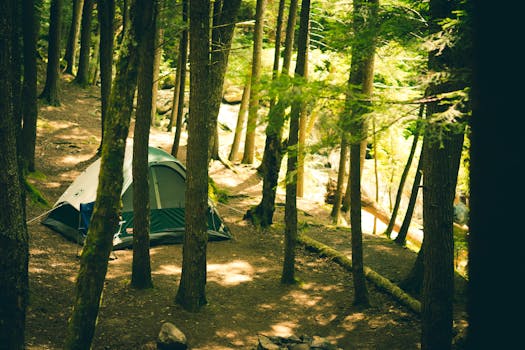
Free stock photo of forest, trees, adventure, camping
Choose Flat Ground
The most important thing to look for when searching for an optimal campsite is flat ground because it could mean the difference between a good night’s rest and waking up to nightmarish surroundings. You are more likely to achieve a comfortable night’s sleep in areas strewn with pine needles, sand, grass or dirt, rather than littered with rocks and roots. Established campgrounds will typically maintain level and safe sites to pitch your tent, often times with streams or meadows as a scenic backdrop. When you find a large and comfortable area, large enough for your tent, use a small rake or similar tool to brush away any sticks, stones or tree branches that might poke you while you sleep. If you do not have a rake, you can use your foot to clean your site of debris. Prior to setting up your tent, assess the condition of the ground by laying your sleeping bag or mattress over the area and testing the comfort.
Avoid Hills
Avoid setting up camp anywhere on a hill, if possible. Whether you’re on the top, bottom or middle of a hill, all of these locations pose a threat to your safety. Rookie campers might mistakenly believe that it’s a good idea to camp in a valley at the bottom of a hill because of the excellent protection from the wind and sun. However, if it rains you may wake up in a puddle of water or worse in a deadly flash flood. Sometimes there is no level ground and you may have to settle for slightly sloping ground. Be sure to position your head on the uphill slope with your feet pointed downhill. If you lie sideways along the slope, you will inevitably roll to one side of the tent, pressing your body into the tent wall material, creating the potential for getting wet from condensation.
Consider Sun Exposure
Always look for an area within close proximity to a shady spot. A tent positioned in direct sun will become sauna-like. Some tents can be damaged or suffer premature aging by the sun’s harmful rays, so always check for tent care instructions before venturing out into the wilderness.
Consider Wind Exposure
Look for a campsite with a natural windbreak. No matter where you’re camping, try to position your tent so the door is facing away from the wind for proper protection from strong gusts. It will be very difficult to get a good night’s rest if your tent is flapping in the wind all night long. Plus, if you’re positioned facing into the wind, your tent will feel drastically colder because of the poor insulation.
Be Close to Water
Some campers feel it is safer to camp near a water source in case they drain their supply of water. However, this may not be the safest choice. There are a couple of reasons for this.
1. Camping too close to a water course can be dangerous if there is rain and a flash flood washes your site away.
2. Camping too close to water can contaminate water supplies. Many established campsites are sited 100 feet or more from a water source.
With this in mind, keep your campsite close, but not too close, to a water source.
Camping in the Forest
Forested areas are popular sites for camping. Many developed tent sites will be flat and designed for tents. Backcountry sites will need a little more consideration. Most developed sites will have harder packed soils and will need sturdy stakes to keep the tent grounded. Forests have a diversity of soil types. Some soils are hard to penetrate with stakes and other soils are loamy and will not hold stakes well. These soil issues show up more in backcountry settings. Do a little research on forest soil types to be assured you have the appropriate stake.
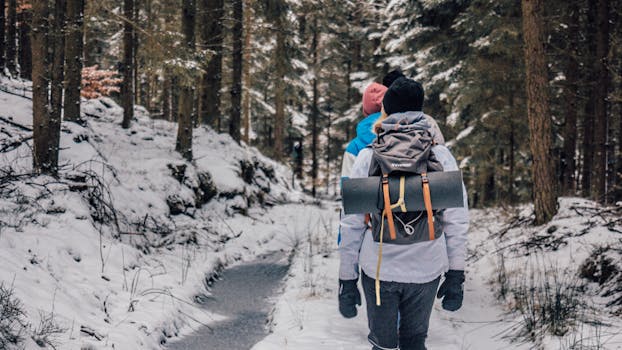
Camping in the Snow
Two People Walking in Woods With Snow

When camping in the snow, if there is fresh deep snow, avoid choosing a campsite near trees laden with heavy snow loads which may drop off in wind or during warmer daytime temperatures. Additionally, in mountainous terrain, avoid bowls and slopes that are prone to avalanche. Stay well back in the trees and up slope from the bowl’s base. Once you find a suitable spot, use your snowshoes or skis to tamp down the ground to create a solid, firm surface. Winter weather conditions may vary from place to place, but it’s always safest to purchase a 4-season or winter tent for proper protection against snow and high winds in exposed tent sites. If you will be camping in deep snow, a snow stake can be a good accessory.
Don’t Leave Your Mark on the Land
In order for everyone to be able to appreciate Mother Nature’s gifts for many years to come, remember your environmental responsibilities. Dispose of your waste properly and do not leave any trace of your visit, on your campsite when you leave. As a general rule of thumb, don’t leave your “footprint” on the earth.

Wild Camping Tips and Kit List

The first rule of Wild Camping club is...  actually really simple! Leave No Trace: if you take it in, you carry it out. What is wild camp...