Showing posts with label foraging. Show all posts

Friday, 14 September 2018

Foraging: A beginner’s guide

Foraging: A beginner’s guide

Ever wondered how to forage for freshly-grown seasonal produce out in the wild? Here, we give you the golden rules of foraging, explaining what to pick when. 
Foraging: A beginner’s guide
One of the most enjoyable things about foraging is the way it compels a greater awareness of one's surroundings – the need to slow down, pause and look. I've been foraging for about 10 years and during that time I've managed to turn my home town into a kind of seasonal wild supermarket – I have 'aisles' for nettles, hop shots and three-cornered leek in spring, elderflowers and lime leaves in summer and walnuts, hawthorn berries and wild cherry plums in autumn. Come June, you'll find me gathering cherriesin a quiet corner of the local park, assuming I've managed to get there before the birds.

What is foraging?

Foraging is the act of gathering wild food for free. Although it's gained far greater popularity in recent years, for our distant ancestors foraging would simply have been a way of life – a necessity in fact. As recently as World War 2, collecting wild rosehips to make syrup became an important way of supplementing vitamin C intake when the importation of fruits such as oranges was widely restricted. 

Five things to forage

Nettles

Nettles
One of the easiest wild greens to identify, a pair of thick gloves in the foraging bag are a must when picking stinging nettles. Early spring is the best time to pick them: choose young, pale green nettle tops – after about late May/June onwards they'll be getting a bit tough and stringy. Never pick when they are in flower and handle with care until cooked – this will remove the sting. 

How to cook with nettles:
Nettle gnudi with wild pesto
Nettle & blue cheese rarebit
Nettle soup
Nettle ravioli


Wild garlic

Wild garlic
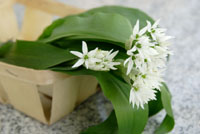
A real lover of wet ground, you'll often find wild garlic (or ramsons as they are also known) carpeting the banks of streams and rivers. Pick young leaves from late March onwards, while the little white flowers that appear later in the season add a gentle garlic flourish to a spring salad.

How to cook with wild garlic:
Wild garlic crusted salmon
Wild garlic chicken Kiev
Wild garlic & nettle soup


Elderflowers 

Elderflowers
If ever there was a flower to mark the move from spring to summer, it's elderflower. Find them from around late May to early July. The most common use is to make them into a cordial, but elderflower fritters are more than worth the effort if you're feeling a bit more adventurous. The elder tree yields a double crop, elderberries being a valuable addition to the autumn kitchen later in the year.


Blackberries

Blackberries
Many people can remember picking blackberries in their childhood. They're easy to identify and pretty abundant in the autumn months. I find that they freeze well and I always make sure to have a frozen stash at hand to last me through the winter.

How to cook with blackberries:
Frozen blackberry yogurt
Bramley & blackberry pie
Our best blackberry recipes
Top 10 ways to serve blackberries
How to pick and cook blackberries


Sweet chestnuts

Chesnuts
There are plenty of wild nuts to be had during autumn, but the squirrels get most of the hazelnuts near me so sweet chestnuts are my go-to crop. Great for pestos and stuffings or simply scored, roasted and eaten on their own.


What to avoid

While the five foods that I've outlined are a relatively safe bet in terms of indentification, it goes without saying that you need to be 100% sure that what you're eating is definitely what you think it is. For instance, wild chervil is a delicious herb, but it also looks almost indentical to hemlock, a deadly plant that will dispatch you into the realm of 'rookie ex-forager' with an alarming degree of haste. Even if you're completely sure that you've got the right thing, it's standard practice to try a small amount first to rather than dive straight into a bowlful of what you've just found. 
Blackberries on a bush


Where can I forage?

While foraging in public spaces and footpaths is perfectly legal, this isn't the case on private land without the permission of the owner, so do ask first. I actually do a fair bit of foraging in my own back garden. Wild seeds invariably find their way in and all manner of things start to appear if I'm a bit behind on my weeding duties.

Where not to forage

While I probably don't need to expand on this too much, when foraging along public footpaths, be wary of spots that could possibly be at 'dog lavatory height'. Also be mindful of areas that are near busy roads as the taste of exhaust fumes won't be a great addition to your wild supper. Finally, if you do find a special patch of an amazing wild food, pick with discretion – this isn't just about leaving some for other people. There's a good clump of jack-by-the-hedge near where I live, but I also know that it's the primary food source of the orange tip butterfly - I always make sure to leave plenty for the caterpillars too.

Wednesday, 9 May 2018

Wild Garlic Recipes

Wild Garlic Recipes  by catherine

Wild Garlic Recipes
Anyone who’s walked through a wood and smelt that distinctive onion-y smell has been near one of the commonest, but little used, wild foods. Wild Garlic (Alium ursinum) or ransoms is common in woods all over the UK. There are usually plenty of them – they spread rapidly once they’re established.
Ransoms have glossy flopped-over, rabbit-ear shaped leaves and white, star-shaped flowers. They’re easy to identify, because you’ll be able to smell them. Fortunately, they don’t taste nearly as strong as they smell!
Unlike cultivated garlic, the bulbs are very small and not worth bothering with. Just cut some leaves at the base without disturbing the plant. The leaves can be eaten raw or cooked.
I think the best uses for them are the simplest: an omelette made with your freshest eggs with some garlic leaves snipped into them.
For something more substantial:
Wild Garlic and Potato Soup
25g butter
couple of handfuls of wild garlic leaves
2 medium-sized potatoes
800 ml of chicken or vegetable stock
salt & pepper
Melt the butter in your soup pot. Roll the leaves, cigar-fashion, and then slice across into strips. Add them to the pot and put the lid on. Let them soften in the butter while you peel and chop the potatoes into cubes. When the leaves are wilted add the potatoes and the stock. Bring up to the boil, then simmer for 20 minutes or until the potatoes are really soft. If you like, add a spoonful of cream and liquidize the soup.
They’re also good in Chinese-style stir frys with some ginger and a splash of soy sauce.
Ransoms have the same health benefits as cultivated garlic, in fact they are thought to be superior. Tucking in might also keep away those troublesome midges (see blog http://www.woodlands.co.uk/blog/wildlife/midges-mosquitoes-and-marmite-coping-with-insects-in-woodlands/) !
Does anyone know if you can use the flowers and seeds like you can with chives?

Friday, 4 May 2018

The Definitive Bushcraft Skills List

The Definitive Bushcraft Skills List


Bushcraft is the art of living in a natural environment, within and in harmony with nature. It is distinct from (though it shares a lot with) survival, where the mindset is only about getting out at the other end as safely as possible. Bushcraft will teach you skills not just to survive, but to thrive in comfort, and rely not on your gear, but yourself. This is a list of the skills you will need.

Finding and Purifying Water

Water is almost certainly the very first thing to worry about when learning bushcraft. The rule of three gives you a maximum of three days without water, which goes down to one in very hot, arid conditions. Remember that even once you have found water, in most cases it will then need at least to be filtered and possibly distilled or boiled before it is safe to drink.
Finding water is often just a matter of understanding your surroundings well, such as knowing that water flows downhill, so valleys and gullies are always a good start. Humans are only animals, and all other animals need water too, so following animal trails or watching for birds flying quickly (they fly slower after drinking, because they are heavier) are also good strategies.
There are many, many different ways to purify water, and there is not space here to do justice to all of them, but suffice it to say that filtering will remove only the larger particles, distilling will get rid of smaller stuff, and boiling will kill bacteria. Sometimes all three may be needed.
Finding Food
There are three ways to find food in the wild: foraging, hunting and trapping. Foraging is by far the easiest to learn, and is likely to produce the most reward. Learn what plants you can eat, and how best to cook them, but be very careful of lookalikes and mistakes. It is best to take a knowledgeable guide out with you at least for your first few trips, and to begin with ingredients and recipes which are simple and well known, like nettle tea and blackberries. Richard Mabey’s Food for Free is an acknowledged Bible for foragers.
Remember that bushcraft is not an ‘all or nothing’ venture’, it can be whatever suits you, so starting off by trying recipes out at home, and then only cooking what you are confident with in the bush is a good way to go. With all foods, but especially in the case of mushrooms, be very careful to only ever eat what you are absolutely certain is safe. Try to get off the beaten path, because the passage of many often obscures or kills plants, and fungi especially are very delicate.
After foraging, trapping is the next most reliable source of food. Learn first to make a few good traps. The Bushcraft Field Guide to Trapping, Gathering, and Cooking in the Wild is a great introduction to many types of snares and traps, with some basic bushcraft tips as well.
wilderness trap
photo: Apache foot trap
Remember that one of the most important things when trapping is to know your quarry, so go out and learn, not just about whatever you want to eat tonight, but also about its environment, where it’s likely to be, what might get to the trap first and so on, and try to factor this into your considerations when building traps.
Finally, there is hunting. Hunting is certainly the ‘coolest’ but also the least efficient way of getting food, and is best suited to large, wild game which it is unrealistic to trap safely and must be killed from a distance. Even in this case, the best course of action may still be to construct a trap to keep the animal immobile, and then approach and kill it from afar with a ranged weapon such as a bow or spear. On the other hand, this approach requires that the hunter checks all their traps very regularly, to avoid inhumane treatment of animals, or losing their quarry to another predator.
If you do decide to hunt directly, obviously ranged weapons are the far preferred choice. What you choose depends on your style of bushcraft, but most people will be going for some kind of bow. Once you have made this decision, the most important thing is the welfare of the animal as it dies. Bowhunting is great, and you may be perfectly happy with the ethics in principle, but surely a quick, clean death is preferable to a slow, dirty one? Make sure you are using the appropriate arrows and a strong enough bow to kill the animal as quickly as possible, and of course make certain that you will only hit an animal, not any people who might be in the vicinity.
Train hard first, practice in your back garden, then on static, and (if possible) moving targets in the woods, before attempting to hunt live game. If you get advice and help from a more experienced hunter then always heed it! Other than that, have fun, happy hunting!
In the case of both hunting and trapping, it is wise and educational to follow the Native Americans and try to use as much of the animal as possible. The primary reason for hunting is meat, but animal skins are a classic of bush tailoring and can be stitched with sinew of the same carcass. Antlers and bones make good tools (including needles), fish hooks and knapping strikers.

Making and Using Fire

Fire Starting methods can be categorized as: strikers, friction, and ‘modern’ methods. Strikers (such as flint and ferrocerium) will last forever (or near enough) but can be tricky to get used to using, and require very good, dry tinder.
With the exception of the fire plough, (which can be useful, but is very labor intensive) all friction methods are drills, which are the most ‘primitive’ of the fire methods. Most use some kind of wound cord, but you can also use your fingers. Drills are difficult to master and can be very tiring, and only really work in the right (dry) conditions with good tinder.
Once you can build (and build up) a fire, learn and practice building different sizes and shapes of fire, for different uses. For example long, thin fires (which can be made to be much hotter at one end) are the best for cooking. The Native Americans of old had a saying which went something like “Red man builds small fire and stays warm, white man builds large fire and stays warm collecting firewood”. There’s nothing wrong with being white, just don’t be white and stupid, build the correct fire for the job, and always clear up and leave no trace.
For longer term living and the beginnings of homesteads, you can also build perfectly good wood-fired ovens and kilns for making baked food and fired pottery. Practicing pit roasting (where you bury a fire with what you are cooking and dig it up the next day) is also an easy way to learn to cook big, hearty meals, without much advanced field dressing of meat.

Tracking

Tracking is an incredibly important bushcraft skill, with applications across the field. Good tracking will of course aid your hunting, but also realize that the flight pattern of a bird or a cloud of midges can lead you to water. The best way to learn tracking is in the field, by long practice. If possible start with a guide, who can teach you what to look for and ‘how to see’ in the right way, then develop further on your own.
Tracking should eventually become not a skill that you actively decide to use, but a part of how you see the world around you, an awareness of your environment and its mechanics.

Tying Knots

Although this is not ‘directly’ a useful bushcraft skill, you will find it comes in handy in a lot of situations. Building shelters is the most obvious, but tying up fire drills and hanging cooking pots also come to mind. Try to learn a range of different ones, across different applications. This is a good list to start with.

Situating and Building Shelters

The title includes the word ‘situating’ because the very first thing to know about shelter is what to build in a given environment, and exactly where to build it. Learn a variety of different environment-specific types (snow hole, debris hut etc.), and practice, practice, practice! Practicing and learning the little tricks which can only come with experience will make your shelters much better when you need them. Shelters should also be appropriate to conditions. If the weather looks good and you are only staying for one night, a few sticks and some debris as a heat reflector are enough, but a two week camp in late Fall is obviously a different matter.
Once you have the smaller, faster types of shelter down, invest time and build a more solid structure like a log cabin, or a shelter built into the side of a hill. This is good experience for long term bushcraft, or if you ever decide to set up a small homestead.
Remember not to discount man made shelters. Try out a few different tarps and learn to use them well. Learn the difference between heavyduty and ultralight and find what you like. If you prefer the heavier side of things, this advice applies more to tents. Remember also that many countries also have systems of free ‘mountain huts’, such as the bothies in Scotland, which provide free accommodation, and sometimes a fire and basic rations.

Finding your Way (Home or Away)

The most basic navigational consideration is to know how to get back to where you started. After that, you also need to know how to get where you are going, and ideally some place of safety in between.
The most important thing is to have a good working knowledge of your environment and its geography, so that even without specialist skills you can have a fighting chance. Look at some maps before you leave, and know where important resources like rivers and public shelters are.
Next is a compass, and knowing how to use it, as well as knowing at all times roughly what direction important places (your home, the nearest place of safety, your shelter etc.) are in relation to you. From this standpoint, you can work on ‘wild compass’, skills like learning to read the stars, sun and moon, and pick up signals from your environment, like feeling rocks, and using which side is warmer to work out where north is.

Taking Care of Yourself

Often overlooked is the art of what do when things go wrong in the bush, which is surprising given the number of sharp tools and fearsome animals available to cause havoc. Foraging again comes in useful here, as some plants (most notably the dock leaf) have medicinal qualities, and any non-harmful, large leaved plant can be used to improvise a bandage, at least briefly.
This is probably the only area of bushcraft where unless you have vast experience, and really know what you are doing, you must take ‘non-primitive’ equipment out with you, making sure to cover every eventuality. Pay particular attention to treatments for injuries from wild animals if they are in the area, serious cuts and bruises (so go heavy on dressings and plasters) and food-related illnesses (food poisoning, indigestion etc.).  Do not be afraid to take a big kit with you, it will be worth it one day.
Many first aid organizations such as the red cross offer training courses, and mountaineering and survival schools often do the same for specialist, bushcraft related first aid. Guidebooks can also be useful, and both The Bushcraft First Aid: A Field Guide to Wilderness Emergency Care Expedition Medicine come well recommended.

Hand Skills

These do not really come under a particular heading, but are important to mention nonetheless. Learning to use an axe, saw and knife properly, as well more specialist tools like a froe or a crook knife for whatever you are particularly interested in will save you a lot of time and effort.
A good place to start is with learning to make tools and equipment for all of the above skills. Make yourself a netting needle, fid or bradawl for complex ropework, or learn to make a knife from flint and pine pitch. Knowing a few ways of building a compass is also very handy. Hunting equipment is very satisfying to make, fishing hooks, lures and flies have endless variations to learn and play around with and bow making is a great thing to add to your arsenal of skills. Good guides can be found all around the internet, but in the case of blacksmithing, forging and more complex bow making skills like tillering, a course or at least some advice from a professional is must.
For a lot of the more ‘primitive’ inclined bushcrafters, the end game here is to flintknapping. With a good knowledge of flintknapping one can make all the tools for bushcraft, including those necessary for making further tools (bow making supplies for example). In the modern day, flintknapping techniques can also be applied to the thick glass which often washes up on river shores, for making arrowheads and blades.
A similarly fundamental skill is making rope, thin cords and threads (and then presumably needles, for which bone is often best). This skill more than any other is a part of ‘absolute bushcraft’ or primitive skills, where everything is made by you, from what you find around you.

In Conclusion

The best way to truly learn ‘bushcraft as a whole, is to combine these elements together, for example, you might take a weekend to learn more about bushcraft cooking, and eat only wild food, prepared only on a campfire, with only vessels you yourself have made. The point is to not treat these skills in isolation, but as parts of a single ability to live independently in the wilderness.

Monday, 26 March 2018

Focus on These 10 Areas to Start Learning Bushcraft Skills

Bushcraft is the name we give a collection of skills that all involve thriving in the wilderness.  From knowing how to build a fire in various conditions to finding food by hunting and foraging, to carving and building necessary items from wood and other natural materials; bushcraft is all about surviving long term without the need for grocery stores, sporting goods stores, or the corner market.
You can break bushcraft down into 10 basic categories to start with, and add more in as you gain more and more skills. Check out the 10 areas of bushcraft skill below and start learning how to survive one bushcraft skill at a time.

Fire Craft

Anyone car start a fire with a lighter, some matches, and a can of lighter fluid, but what happens when all you have is a striking rock and the organic materials laying around in the wilderness?
Fire craft is all about starting and maintaining fires in any condition. This includes multiple techniques for building a fire like flint, the sun, and smoldering plants. It also covers how to use fire for survival and how to transport the fire you built form one location to another to avoid having to rebuild.

Tracking

tracking
There are a lot of reasons why it’s a good idea to get good at tracking. First, it’s a pretty great way to catch your dinner but past that it’s a very important part of OpSec.
By being able to track people and animals you can see if your proposed campsite is frequented by any specific animals or if people have been through it before. You can also see if anyone has been around your campsite or homestead recently.
Animals and people tend to follow the same paths over and over again, so being able to recognize these and track where they go can show you where to set snares, get water, and where to avoid when the footprints are bigger than you’d like.

Hunting

This one is pretty obvious, but you need to know how to hunt effectively with a variety of tools. Sure, using a high-powered rifle makes hunting a lot easier, but in the bush you may only have basic supplies and a rifle might not be one of them.
The most common way to hunt in the wild is by trapping. Setting a snare to catch small game is a great way to learn how to survive off the land. Beyond the knowledge of trapping you need to learn how to handle what you trap and hunt once you’ve gotten it.
Learn simple butchering and skinning techniques to make sure you can actually eat what you catch.

Fishing

Similar to hunting and trapping, learning to fish with a variety of tools will make sure you have a good high-protein and fat source of food. The two basic ways of fishing are with a line and hook and by trapping. You can build a fish trap as seen in this video to collect fish without extra work on your end.
Keeping learning how to make a hook and lures is important as well, but the fish trap is your best way if you have the materials and the ability.

Foraging

You can’t survive solely on animals and fish you’ve caught, especially if you can’t build a fire to cook them on, which means foraging is just as important. You need to learn what plants are OK to eat and which ones aren’t, as well as how to determine this in the wild.
Check out this site for some basics on eating plants and foraging, but make sure you learn what’s available in your area and what is your best bet for the most carbs and protein per ounce to save energy while foraging.

Shelter Building

Building a proper shelter is more important than just keeping dry, it gives you a sense of safety and belonging and keeps you safe from animals. Keeping dry is more important than just comfort too, keeping dry will keep you from getting sick and keep your gear usable.
Learn not only how to build a basic shelter, but how to build one from a variety of resources so you’re never stuck out in the cold.

Knives and Axes

Survival knives
One of the most important tools to bushcraft has to be the bladed implement. Survival knives and axes are vital to survival and knowing how to use and care for them correctly is as important as knowing how to find water.
We’re not talking about heavy-duty knifes here, but instead they are generally smaller and built for durability. Learn how to not only use a knife and axe correctly, but to sharpen, repair, and even make your own. Remember, there may very well be a time that there aren’t stores to buy knives from, so learn while you can!

Wood Carving

You use a lot of wooden implements every day and don’t even think about it. From wooden spoons to handles for knives and other tools, knowing how to make wood into what you need it to be is pretty important.
Learn how to work with wood from start to finish and you can make just about anything. Think back to your woodshop days and replace all the power tools with hand tools.

Container Construction

Being able to make the containers that clothes, food, and tools go into is pretty important to learn. Today we go to the store, find something that fits and use it until it breaks and repeat the process. The bushcraft way is very different and once you build a few containers yourself, you’ll respect them a lot more.
Learn how to work with a variety of materials including leather, metal, wood, and even odd materials like tire rubber, which by the way makes a great sandal. You can make a waterproof tarp or food container by melting and applying wax to canvas and buckets out of hollowed out logs. Whatever you choose to make, remember that once you’re on your own, there’s no more Tupperware lady coming around to sell you containers.

Rope Craft

Anyone who was a Boy Scout knows that rope craft and knot tying is one of the most important survival skills out there. From being able to tie down your tent to tying snares and quick release knots for climbing, rope craft is pretty important stuff.
Beyond tying knots however, knowing how to make rope is pretty important stuff. There are a few ways to make rope yourself, and this site has some great information on how to do it from natural fibers.

Wild Camping Tips and Kit List

The first rule of Wild Camping club is...  actually really simple! Leave No Trace: if you take it in, you carry it out. What is wild camp...