Showing posts with label wild garlic. Show all posts

Wednesday, 9 May 2018

Wild Garlic Recipes

Wild Garlic Recipes  by catherine
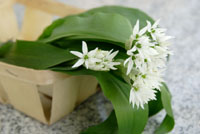
Wild Garlic Recipes
Anyone who’s walked through a wood and smelt that distinctive onion-y smell has been near one of the commonest, but little used, wild foods. Wild Garlic (Alium ursinum) or ransoms is common in woods all over the UK. There are usually plenty of them – they spread rapidly once they’re established.
Ransoms have glossy flopped-over, rabbit-ear shaped leaves and white, star-shaped flowers. They’re easy to identify, because you’ll be able to smell them. Fortunately, they don’t taste nearly as strong as they smell!
Unlike cultivated garlic, the bulbs are very small and not worth bothering with. Just cut some leaves at the base without disturbing the plant. The leaves can be eaten raw or cooked.
I think the best uses for them are the simplest: an omelette made with your freshest eggs with some garlic leaves snipped into them.
For something more substantial:
Wild Garlic and Potato Soup
25g butter
couple of handfuls of wild garlic leaves
2 medium-sized potatoes
800 ml of chicken or vegetable stock
salt & pepper
Melt the butter in your soup pot. Roll the leaves, cigar-fashion, and then slice across into strips. Add them to the pot and put the lid on. Let them soften in the butter while you peel and chop the potatoes into cubes. When the leaves are wilted add the potatoes and the stock. Bring up to the boil, then simmer for 20 minutes or until the potatoes are really soft. If you like, add a spoonful of cream and liquidize the soup.
They’re also good in Chinese-style stir frys with some ginger and a splash of soy sauce.
Ransoms have the same health benefits as cultivated garlic, in fact they are thought to be superior. Tucking in might also keep away those troublesome midges (see blog http://www.woodlands.co.uk/blog/wildlife/midges-mosquitoes-and-marmite-coping-with-insects-in-woodlands/) !
Does anyone know if you can use the flowers and seeds like you can with chives?

Tuesday, 20 March 2018

March free wild food foraging #wheresmyfoodfrom

I’m taking part in the Live Happerley Challenge to know where all my food comes from. I’m doing it on a tight budget though and any free food is good food. It is early March and there is not much growing in my garden. The local parks are starting to grow a couple of very useful edible plants though. They are easy to identify, easy to cook and easy to find.
With any foraging for wild food avoid areas where dogs might have peed. Avoid plants growing by busy roads if you can. Take gloves and a bag to put your foraged food into and wash well when you get it home.

Nettles

nettles
If you are new to foraging, nettles are a brilliant place to start. They are unmistakable and you have to pick them carefully so you will not pick anything else by accident. They are also really simple to cook.
Nettles love rich soil so if you have them in your garden it is a good sign. In towns you can often find them in parks and in any rough ground. Young nettles cook up to be a little like spinach. You just need the newest top 3 or 4 leaves. You should be able to just pinch them off. If you don’t have gloves you can get away with grabbing the stinging nettle very firmly. This is not guaranteed but the stings hurt more if they just brush the skin.
  • Soaking nettles takes away the sting.
  • Steam or saute the young nettle leaves or add to a curry or stew.
  • Mash up with nuts and garlic to make pesto.
  • Dry the leaves for a supply of nettle tea, just add hot water.

Ramsons

Wild garlic grows in shaded areas, often near water. Lily of the Valley looks a lot like Ramsons but is poisonous. Only Ramsons smell garlicy so as long as you pick each leaf individually you should be ok. If you are in any doubt, don’t risk it. Paul Kirtley has a detailed post that will help you easily identify the safe Wild garlic and avoid the unsafe Lily of the Valley. If you have never seen them before please do a little research, follow my links at least so you are less likely to make a mistake.
The Wild Food website has lots of information about Ramsons, and there is a detailed look at them in this video from MCQ Bushcraft.

If you like garlic, you will love Ramsons. They make great pesto – with any nuts so no need to go to the expense of pine nuts. They wilt down as a side dish, stir fry well and are fantastic chopped into bread dough.

Wild Camping Tips and Kit List

The first rule of Wild Camping club is...  actually really simple! Leave No Trace: if you take it in, you carry it out. What is wild camp...