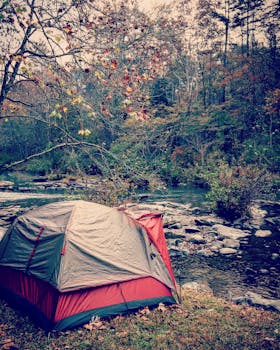
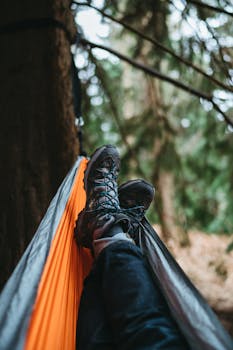
The idea of hammock camping used to scare me.
Sleeping overnight in a suspended cocoon seemed like too vulnerable of an undertaking in the outdoors. In a hammock, I felt like a perfectly packaged burrito, an easy-access menu item for all passing bears.
For the longest time, I could not understand why someone would give up a perfectly good tent for a nylon swing.
I refused to accept hammocking as an alternative to tent camping.
But as I read more and more life-changing stories from tent camping converts, the more intrigued I became.

After much encouragement from friends, I decided to give hammock camping a go and I’m so glad that I did.
The Fear Of Failing
“How was that first night of sleeping in a hammock?’ you may ask. Well, it was terrible.
I woke up cold, wet, stiff and uncomfortable. But since I survived and wasn’t wet from any bear drool, I decided to try again the next night and learned something very important: Your first time camping in a hammock is miserable. The second time is life changing.
Nowadays, that’s what I always tell folks curious about this lifestyle, and the more people I talk to, the more convinced I am that this is true.
I say that your first time hammock camping probably won’t be fun, because without the proper skills and accessories, nothing in the backcountry ever is.
Remember the first night you spent sleeping in a tent? It probably wasn’t perfect.
It’s easy to forget that every new activity will have its learning curve.
At one point in your life, tent camping was not fun. But you tried again, with newly learned skill and accessories. Now, on flat, dry ground with tent stakes, a footprint, a rain-fly and sleeping pad, you were ready for anything.
Never let your fear of failing stop you from having the best night’s sleep of your life.
Overcoming The Learning Curve
Fortunately, we live in an era of instant-access information.
While my first time camping in a hammock was not fun, I could have made it much easier on myself had I attempted to read any sort of tips or instructions beforehand.

If you’re reading this, hopefully you’re less stubborn than I and more receptive to learning things the easy way.
Over the years, I’ve developed an arsenal of tips and tricks to having the ultimate hammock camping experience.
You can read a full guide here.
IN SHORT, WHAT ARE THE RULES?
Is Hammock Camping Worth It?
Now, I’ve explained that hammock camping can be just an enjoyable as tent camping. But is it really worth it to buy a whole new package of gear?
Are there any benefits to sleeping in hammock that make it better than tent camping?
Yes.
Once you learn all the little tricks and skills necessary to sleeping in a hammock, you won’t go back to your tent again. Here is why:
PRICE, SIZE AND WEIGHT
A good tent can cost anywhere from $200 to $500 without accessories. By contrast, you can find a high-quality backpacking hammock for just under $60.
Your typical tent set-up will weigh 2 lbs at the very least. Most hammocks can fit in the palm of your hand and will weigh at the most, 2 lbs.
A tent requires many accessories, no matter how or where you intend to camp. You need poles, a rain-fly, a sleeping pad, stakes, vestibule and footprint. A hammock will only require a suspension system to go with it, making it not only easier to pack but cheaper as well.
FINDING A CAMPSITE

A good campsite, according to Leave No Trace principles, is found and not made.
But finding a campsite that will fit a 7x4 dimension tent is not always easy.
The ground must be flat, impacted, durable, comfortable, well sized and away from any water sources. You can’t camp in active wildlife habitats. You don’t want to park yourself next to a snake hole.
And you definitely won’t enjoy discovering it’s a flood plain at 2 in the morning.
In the backcountry, finding an ideal tent camping spot can take an hour.
Compare that experience to the process of hanging a hammock. All you are really looking for here are strong, durable trees.
Never let the terrain dictate your camping experience.
SETTING UP YOUR CAMPSITE
Have you ever hosted or viewed a tent set-up race? It’s intense, pun intended, and yes, an actual thing.
Campers race to see who can set up their tent the fastest. Poles are swinging every which way. People are scrambling. Nylon is flying around in the wind.
The world record for erecting a 4-man tent with a team of 10, according to these guys, is 1 minute and 58 seconds.
That’s twice the time it typically takes me to set up my hammock by myself. The numbers speak for themselves.
COMFORT
So, you think you have the perfect tent campsite. It seems relatively flat, comfortable enough and impacted. Exhausted, you set up your structure and crawl in to go to sleep.
Lying down, however, you now realize that you’re parked on a small incline.
You roll to the edge of the tent and get stuck there.
How did you not notice that massive boulder that is now digging into your spine? Why is that one part of the tent sagging so much? How is the vestibule flapping so much in the wind?
Moving your tent would be too much of a pain in the ass, so you choose to deal with it. Frustrated, you toss and turn all night. You never sleep. The site was too good to be true.
Compare that experience to sleeping in a hammock, which is actually much better for your physical and mental health.

In a hammock, your body is naturally cocooned into the biologically ideal sleeping position. There are no uncomfortable rocks or pressure points to worry about.
More and more research and literature suggests that hammock sleeping is the best form of sleep.
Scientists over at the University of Geneva have found that we are able to sleep much deeper in a hammock than even in our regular bed. This is thanks to that gentle rocking sensation that reminds us so much of our crib days.
Have you ever actually tried to stay awake in a hammock? My record is around 4 minutes.
BEST STARGAZING EVER
When I think of camping, I think of two quintessential activities – s’more making and stargazing.
Feeling small and insignificant in this massive universe is one of the best parts of heading out in the backcountry and getting in touch with nature.
But unless you own a mesh-topped tent, falling asleep under the stars is probably out of the question.
From a hammock, you never need to worry about this problem again. No experience compares to that of swaying under the trees and stars in the middle of nowhere.
Combating The Weather & Outfitting Your Hammock

If you’re not convinced by the functionality and convenience of a hammock, now consider the versatility and customization opportunities.
In today’s age, a hammock can be outfitted with pretty much everything that a tent can.
Some accessories can even transform your hammock into a tent in the sky. Keep all the functions of a real-life tent, with the ergonomics and comforts of a hammock.
Depending on your needs, you may only want or need a few of these items.
You can find a full list of descriptions and instructions here on your hammock camping guide.
But What About Winter Camping?
The biggest complaint we ever receive about hammock camping is Cold-Butt Syndrome.
Due to the natural curvature of a hammock and air circulation underneath, our bum tends to get chilly quickly.
Even if you add a sleeping bag to the mix, it may not even help.
It’s easy to convert your hammock into a four-season camping structure.
There are over and underquilts designed to fasten to hammocks to resolve this exact issue. With an underquilt, you no longer need to worry about ineffective sleeping bag insulation, as the quilt is designed to effectively seal heat in and wick away moisture.
You officially have no excuse not to give it a go.
What Do You Have To Lose?
More and more research is suggesting the power of a hammock bound snooze.
It’s better for our backs, our brains and our health.
Hammocks allow us to sleep deeper than we would normally, making it not just a good tent replacement but also a valuable activity for your everyday routine.
If you’re intrigued but not quite ready to take the plunge, we understand.

It’s fair to take it slow.
Next time you go camping, set up both your tent and hammock. Start out the evening in the hammock. If it doesn’t work out, you’ll have a safe and familiar back-up plan.
As far as we know, no one has ever been eaten by a bear burrito-style from the comfort of their hammock.