
Thursday, 29 March 2018

Wednesday, 28 March 2018
A BEGINNER’S GUIDE TO LIGHTWEIGHT CAMPING
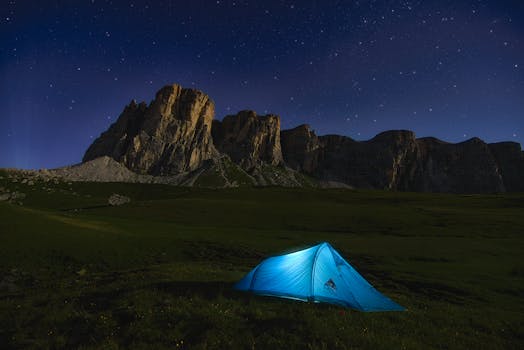
When you go camping or backpacking, it can be all too easy to take everything but the kitchen sink. However, this can very easily lead to overflowing rucksacks, aching backs and shoulders (and even injury), and generally a rather uncomfortable time of it.
If that sounds familiar, or you’d like to avoid any of that from the outset, then it might be worth considering lightweight camping.
What is lightweight camping?
On a very basic level, lightweight camping is pretty straightforward – just stripping out all the gear that isn’t essential, and choosing products that are more compact and weigh less than you’d perhaps normally take with you.
We can start to get really technical looking at pack weight, and really strip everything back if we want to talk about ultralight camping or backpacking. For instance, lightweight base pack weight is often defined as under 10kg, and ultralight as under 5kg.
However, we’re not going to go that far. For the purposes of this guide, we’re going to keep it relatively simple and assume you’re someone who just wants to reduce the weight of the gear you’re carrying.
Those taking part in the Duke of Edinburgh’s Award, for instance, will want to keep their pack size down to a minimum, as might families who are fed up taking half their house with them when they go away.
Lightweight Camping Gear List
Obviously you should leave behind non-essentials, but what should you take with you? We’ve put together a lightweight camping gear list, with some helpful advice on what to look for when buying your camping equipment.
Lightweight camping tent
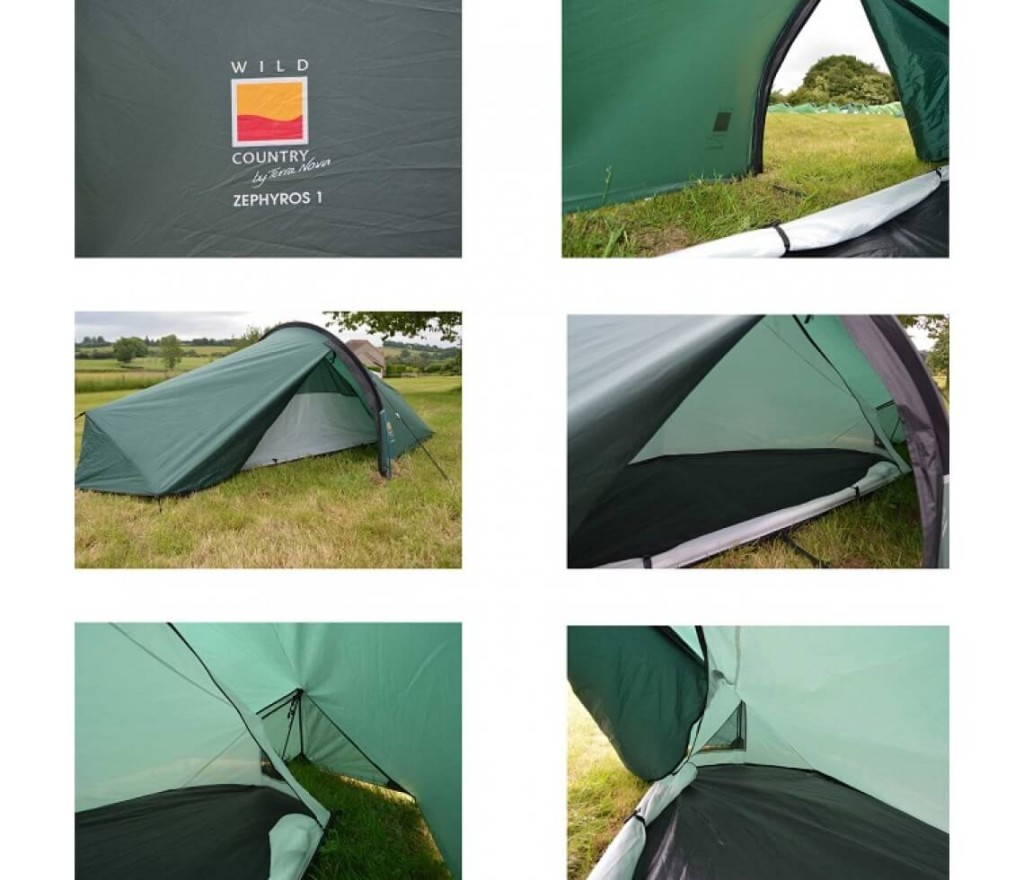
Your tent is probably going to be the heaviest piece of equipment you take with you, so it’s important to try and be as economical with space as you can. A one-person tent is ideal for the warmer months, although in winter you might want to consider a two-person tent to accommodate extra kit.
Wild Country & Terra Nova make excellent lightweight tents, but most brands have suitable selections. Take a look at all our lightweight tents for camping or backpacking, or check out our one-man tent buying guide.
Lightweight sleeping bag
Getting a good night’s sleep is important, and going lightweight doesn’t mean you have to forego getting some decent shut eye. Mummy sleeping bags are a good choice, as they tend to be warmer, lighter and have a smaller pack size.
Then it’s a choice between down and synthetic filling. Down is lighter, packs smaller, and has incredible warmth-to-weight ratio – although it is more expensive, and damp/wet conditions can affect the performance of the bag. Synthetic is cheaper but generally heavier and bulkier.
Opt for a 1-2 season sleeping bag in nice weather to cut down on the bulk. You could use a 1-2 season bag even in colder weather, and just put more layers of clothing on or use a sleeping bag liner, but we’d always recommend having a sleeping bag that provides the appropriate level of warmth.
Shop all of our sleeping bags.
Lightweight sleeping mat
A good quality sleeping mat is also a key part of getting a good night’s sleep, so it’s worth getting a good one. Granted, you could opt not to take a mat if you really want to cut down on bulk, but we’d always recommend taking one.
¾ length self-inflating mats are a great option, as they’re nice and comfy and also pack pretty small. For winter, even if you’re trying to go lightweight, we’d still advise taking a full-length sleeping mat, as they’ll help reflect the heat back up to your body and reduce cold spots coming through the cold ground.
Shop all of our sleeping mats.
Lightweight stoves & cookware
If you’re going to be doing a spot of cooking, then you’re going to need a lightweight stove and cookware – unless you plan on making a fire, of course.
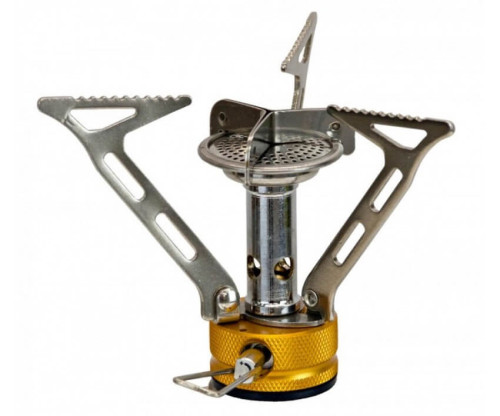
Jetboils are excellent at what they do, boiling water very quickly, but they can be a little bulky. This Vango folding gas stove is a good choice if you just want something simple.
Sea to Summit also make some excellent lightweight and space saving cookware, such as collapsable bowls and other handy bits and pieces. If you’re cooking for one, then don’t bother with plates or bowls – just eat straight out of the pan!
Take a look at all of our camping stoves and cookers.
Lightweight rucksacks & backpacks
The time of year and extent of the lightweight camping trip will determine the size of rucksack you’ll need. Around 60L capacity should be fine for most activities – however, in summer you should be able to get away with an even smaller rucksack as you’ll need fewer layers and a thinner sleeping bag, requiring less room in your pack. We’d still recommend taking a dry bag to keep your kit dry and organised.
See all of our rucksacks or have a read of our rucksack buying guide for more information.
We have also produced a guide on how to pack a rucksack to make the most of the space you have available.
Clothing
Are you someone who packs enough clothes for a month away, even though you’re only going for a couple of nights? If so, you’ll have to cut back to only a couple of outfits.
Try layering thin clothing rather than bringing big, bulky items – baselayers are ideal for this, helping to keep you warm while taking up very little room. Garments made from merino wool are also good as it’s quite lightweight and dries quickly if it gets wet.
In terms of footwear, ditch the walking boots and try walking shoes or trail shoes instead. They’re much more lightweight and should be perfectly suitable for most short to mid-length walks.
Food
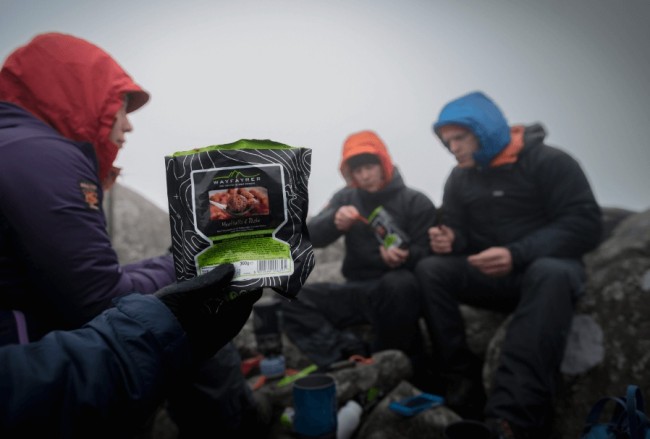
Dried and dehydrated food is ideal. It won’t spoil as easily, but it also packs much smaller than regular food. You can have whole meals without having to take all the ingredients separately – and don’t worry, they’re very tasty and nutritionally balanced!
We stock Wayfayrer and Adventure Food camping meals, both of which have a wide range of choices available.
Have a look at all our camping food.
Water
Water is absolutely essential to your wellbeing when camping or backpacking, so always make sure you have access to some, one way or another. You’ll need it for drinking and for cooking if you’re using dried food, so always ensure you have enough.
Use a collapsible water container, so when it’s empty, it’s much easier to store. Don’t bother with metal bottles; they’re far too heavy. You can also buy hydration bladders that will fit inside most rucksacks if you have space.
You may have access to natural fresh water while you’re away, such as a tarn, and if you want to get your water from there, make sure you have water purification tablets with you (it’s good to have some of these with you anyway). However, to be on the safe side, try and stick to running water if possible.
See all our camping water containers.
Bonus tips for lightweight camping
As well as the advice above, here are some handy camping hacks that will help you cut down on how much gear you take with you.
- Cut down the length of your toothbrush.
- Use a cheap foil emergency blanket under your sleeping mat for extra insulation.
- If you’re taking a map, cut out and take with you only the bit you need.
- Toilet paper – remove the cardboard centre, so it packs flat, and put it in a plastic bag.
- Cut up a straw. Fill the pieces with toothpaste for one-use packets. Seal the ends. with a lighter – be careful!
- Check the weather – by knowing what the weather’s going to do, you can plan ahead and leave unnecessary gear at home.
- Use a head torch rather than carrying a bulky torch in your back. This also frees up your hands.
- Make a small first aid kit – put plasters, a few pills, antiseptic wipes, and whatever else will fit into a pill bottle.
- Dry out your gear – if it gets wet, then it’s going to weigh a lot more than if it’s dry.
- Use a hydration bladder rather than bottles of water. Some rucksacks come with space specifically for them.
- One of these Sea To Summit Sporks will give you a full set of cutlery.
- Use nearby rocks as tent pegs.
- Try a microfibre instead of a beach towel – lightweight, quick-drying and dirt-resilient.
- Use your pack instead of a pillow.
One last and very important tip is to never take any unnecessary risks when lightweight camping. Always make sure you have enough stuff with you to stay warm, fed and hydrated. You might want to cut down on weight, but you need to make sure you stay safe.
Tuesday, 27 March 2018
HOW TO CHOOSE THE BEST TENT TO TAKE BACKPACKING
How on earth do you pick the best backpacking tent?
I’ve been backpacking around the world for nine years now and I’ve camped out in over fifty countries on my travels. Camping might not be for everybody; pitching and living in a tent can be a pain in the ass especially after a long hike or a hectic day on the road. But… Having a tent with you allows you to sleep in truly stunning untouched wildernesses and when you zip open your tent in the morning and are rewarded with gorgeous views, it’s worth it.
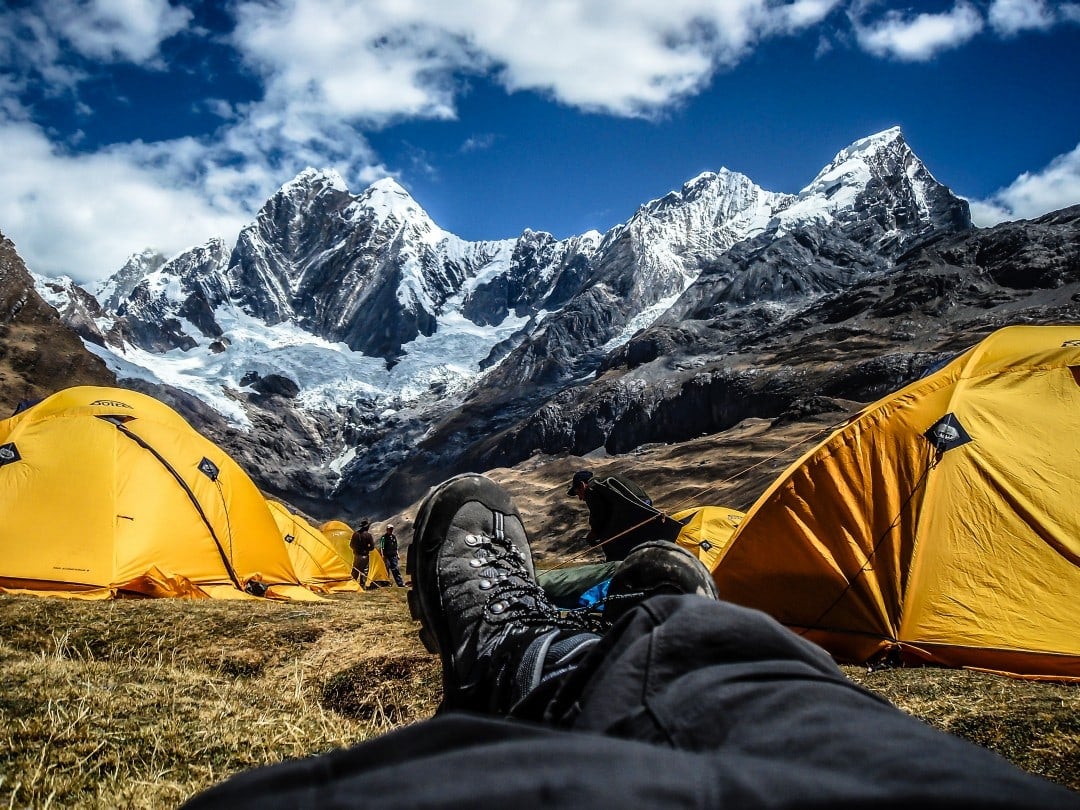
Table of Contents [show]
Quick Answer: Best Backpacking Tents
- MSR Hubba Hubba
- Vango Banshee
- Rei Quarter Dome 3
- Nemo Hornet 2P
- Scorpion 2
- Big Agnes Fly Creek UL1
- Jump to –> Backpacking Tent Reviews
Why get yourself a backpacking tent?
There are so many epic ways to travel, but the moment you equip yourself to get off the beaten track and set off trekking into the wild unknown, you have nailed it. Having a camping tent with you opens up a whole new world of possibilities – you can save a ton of money by camping and if you’re hitchhiking you really MUST have a tent as there is no way of knowing where you’ll end up sleeping!

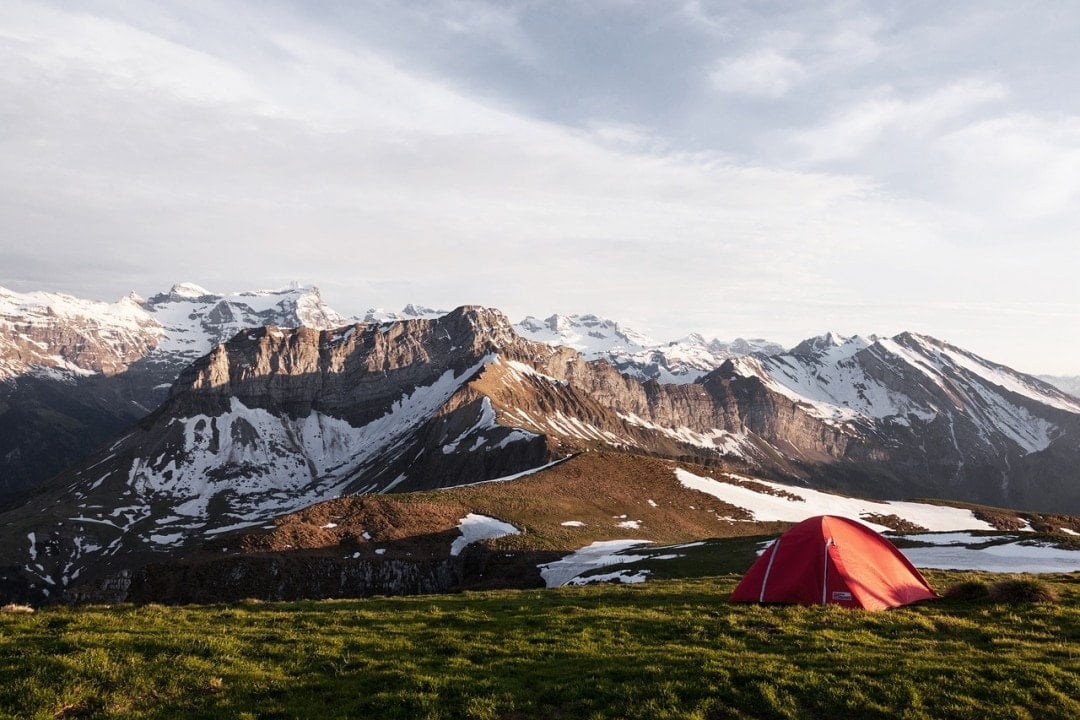
An ancient Vango backpacking tent in front of Jomalhari, Bhutan’s second highest peak.
If you are on a long-term budget adventure, having a tent really is a necessity as it will save you so much cash and gives you so many more options. A travel tent not only saves you money in the long run but frees you up to stay in a place you otherwise could never have stayed in. Some of my most memorable travel experiences were only possible because I was camping …
There are literally thousands of camping tents available on the market but most of them are far from ideal for backpackers. Cheap pop-up tents are great for festivals but they are bulky and won’t last the wear and tear of regular use – you need something tough. I’ve owned a few backpacking tents in my time and tried some of the best tent brands for backpacking. I can tell you right now, before you even read the rest of this article, that the best value backpacking tent is the Vango Banshee.
This is not the only good option out there though and if you can afford to spend a little more there are some next-level backpacking tents out there… I have listed in this article, the BEST backpacking tents you can hope to buy in 2017. This list includes best single backpacking tent, best beginner backpacking tent, best small backpacking tent, best wet weather backpacking tent, the best tent for backpacking and camping and best ultralight solo backpacking tent. So for those looking to find the best one person backpacking tent or just curious as to which ones I’ve picked? Read on…
Ready for an epic adventure?
How to pick the best backpacking tent for you?
Depending on how you travel, different backpacking tents have different pros and cons. It can be hard to figure out what the best backpacking tent brands are. Personally, I opt to go for something light and compact as I quickly get sick of carrying a heavy tent around. When choosing the best backpacking tent for yourself, here’s what you should consider…
- Size when packed
- Size when open
- Price
- Weight
- Pitching time
- Season
- Functionality
- Durability and strength
| Product | Key features | Price | Weight | Size | Pitching time |
|---|---|---|---|---|---|
| MSR Hubba NX | 2 doors, small outdoor space, 3 season. Find out more | $$$ | 1.6 kg | 1, 2 or 3 berth. Compresses for medium is 46cm x15cm | 6 minutes |
| Vango Banshee | 2 doors, small outdoor space, good water proofing and fire retardant. Find out more | $ | 2.35kg | 2 berth, compresses to medium (44cm to 14cm) | 7 minutes |
| Rei Quarter Dome 3 | 2 entrances, 3 seasons Find out more | $$ | 2.07 kg | 3 person, 47cm by 19cm | 8 minutes |
| Nemo Hornet 2P | 2 entrances, 3 season Find out more | $$$ | 1 kg | 2 person, 48 cm by 12cm | 4 to 5 minutes |
| Scorpion 2 | 2 person, 4 season Find out more | $$ | 2.6kg | 2 person, but can sit 6 in a survival situation | 6 minutes |

The 5 Best backpacking tents of 2017
Here is a list of kickass backpacking tents that will make your adventure-ing much simpler!
MSR Hubba Hubba
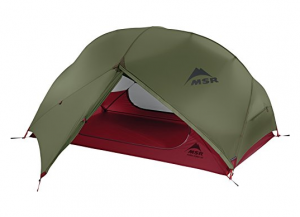
Wow! $400…. shit. Never fear amigo, there are some cheaper options on here but I had to start with the MSR Hubba as this is hands down the best backpacking tent that money can buy. It’s one of the best lightweight tent for backpacking, designed for stormy conditions and is one of the most waterproof backpacking tents around. It’s great for two people and is really quite spacious for a two person tent; it is shaped to allow you to sit up throughout most of the tent. I’ve had both the two person and the three person MSRs and loved them both dearly. The two person is one of the best couples backpacking tents – there’s room to roll around.
MSR is one of the most respected brands in the backpacking tent and gear industry and they have seriously decent customer support – when you buy an MSR tent it comes with a lifetime warranty so you can see it as an investment, it’ll be the last tent you ever have to buy! MSR Hubba comes in three sizes; one person, two person and three person. If you are travelling alone and aren’t bothered about not having much space, check out the MSR Hubba NX – this is the best solo tent for backpacking by far.
Best for: Best ultralight backpacking tent, great storm protection and use of space.
Key Features: 2 doors, small outdoor space, 3 season.
Weight: 1.6 kg
Size: 1, 2 or 3 berth. Compresses for medium is 46cm x15cm
Pitching time: 6 minutes
Pros: Ultra light, outstanding weight to space ratios, leading in material technology, lifetime warranty
Cons: Expensive, but then the lifetime warranty makes it worth it!
Vango Banshee
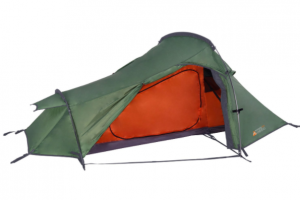
Without a doubt, the best budget backpacking tent is the Vango Banshee. I used a Vango Banshee for years before eventually upgrading to the MSR Hubba Hubba and I’ll tell you this – I loved my Vango. Vango makes some quality shit and the Vango Banshee is the best cheap backpacking tent I’ve ever come across. The good news is; this isn’t like most cheap tents. The Banshee is a little heavy and a bit on the small size for a two man tent but it’s the best compact backpacking tent, tough and seriously durable. For the money you save, the compromises are minimal, this really is the best value backpacking tent you’re going to get! If you are new to backpacking and don’t want to spend loads on a tent straight away, this is one of the best beginners backpacking tent.
Best for: Best Cheap Tent for Backpacking
Key Features: 2 doors, small outdoor space, good water proofing and fire retardant.
Weight: 2.35kg
Size: 2 berth, compresses to medium (44cm to 14cm)
Pitching time: 7 minutes
Pros: Best backpacking tent for the money, strong and durable.
Cons: Small for a two man.
Rei Quarter Dome 3
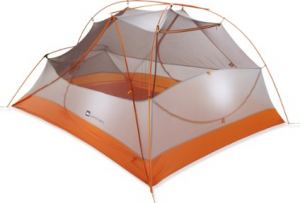
Best for: Best lightweight 3 person tent for backpacking and it looks cool.
Key Features: 2 entrances, 3 seasons
Weight: 2.07 kg
Size: 3 person, 47cm by 19cm
Pitch Time: 8 minutes
Pros: Ultralight and spacious to sit up in, it is definitely one of best freestanding backpacking tents
Cons: As beautiful as it is white is not an ideal colour and it is bigger than the average backpacker needs.
Nemo Hornet 2P

Best for: Lightest backpacking tent by far
Key Features: 2 entrances, 3 season
Weight: 1 kg
Size: 2 person, 48 cm by 12cm
Pitch time: 4 to 5 minutes
Pros: Ultralight and well designed for quick set
Cons: Mixed reviews on the waterproofing design and strength of materials.
Scorpion 2
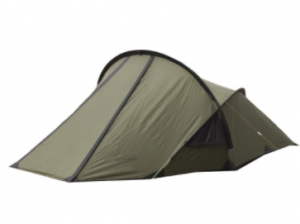
Best for: Space and varying weather conditions. One of the best backpacking tents for travellers who plan to do a lot of camping.
Key Features: 2 person, 4 season
Weight: 2.6kg
Size: 2 person, but can sit 6 in a survival situation.
Pitch Time: 6 minutes
Pros: Spacious and one of the few 4 season tents the would work well for backpacking in this price range.
Cons: It is a little heavy.
Big Agnes Fly Creek UL1
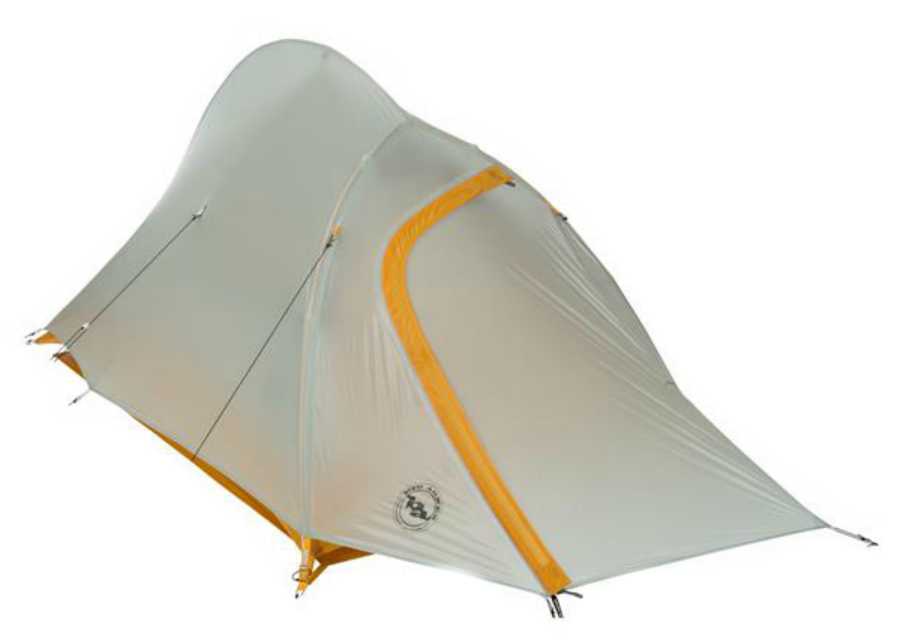
The Big Agnes Fly Creek UL1 is one of the lightest free-standing tents on the market. The exceptional design, coupled with awesome fabrics makes it hard to beat in terms of efficiency.
If you’re looking or a tent with an easy set up, and an overall versatile tent, this one might be for you. The free-standing build makes it easy to pitch almost anywhere. And the guy line locations will ensure that this tent can get you through the gnarliest storms.
Best for: Ultralight backpacking from March through September.
Key Features: 1 person, 3 season
Weight: 27 ounces / .77kg
Size: 1 person, but you could fit two in a survival situation
Pitch Time: 5 minutes
Pros: It’s incredibly lightweight and durable.
Cons: The center seam is known for taring.
Camping Hammocks
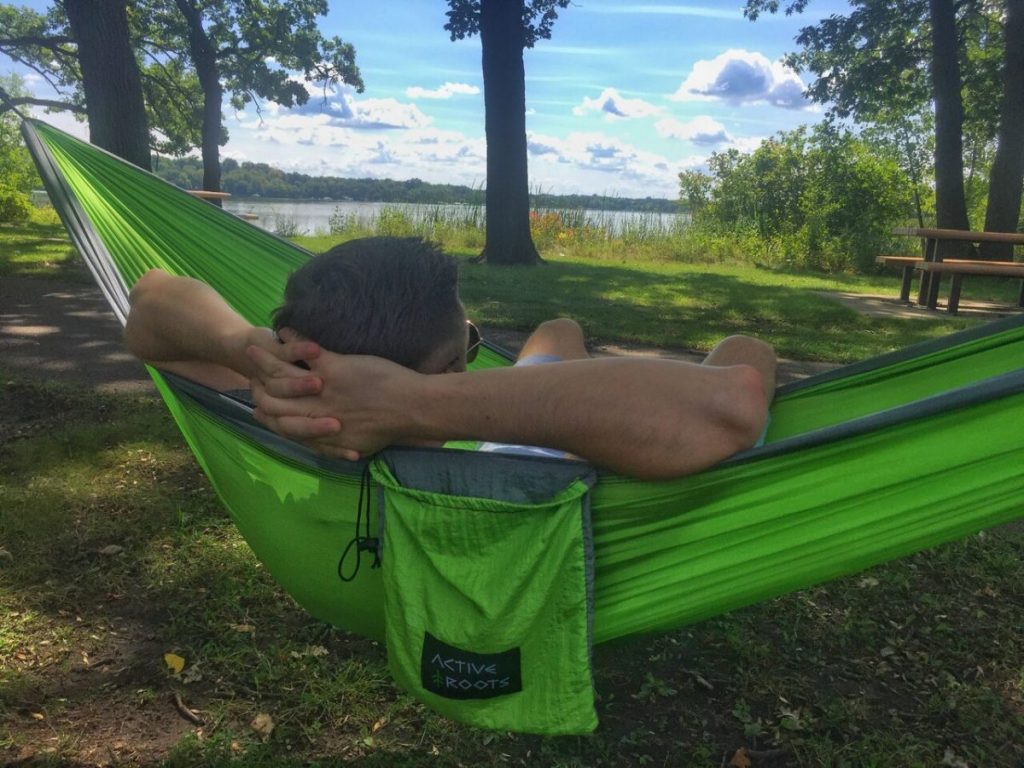
If you just don’t want to take a tent, at least take a hammock! Camping hammocks are compact, light and give you a ton of freedom. If you’re travelling solo then I would suggest getting a hammock rather than a tent (depending on where you are travelling) or even getting both as a hammock opens up a whole new world of outdoor sleeping… Check out The 10 Best Camping Hammocks to find the best backpacking hammock tent for you or, if you’re feeling lazy – buy this one; it’s the best value camping hammock around.
Conclusion
Everyone has different needs and budgets when backpacking, so when I was asked what is the best tent for backpacking, I decided to break down all the information you really need to pick the best tent for backpacking. If I had to pick one overall epic tent for backpacking I would say go for the MSR Hubba Hubba. But, this is The Broke Backpacker, and I get that this tent is expensive – the best budget tent on the market is hand’s down the Vango banshee and this is what I travelled with for years.
If you are off camping, take a headtorch – it will be endlessly useful.
Hitting the road and unsure what you’ll need or want to know the best way to pack a tent for backpacking – check out the backpacking packing list.
So pick up the best budget solo backpacking tent and head out there! Happy camping amigos!
Subscribe to:
Posts (Atom)
Wild Camping Tips and Kit List
The first rule of Wild Camping club is... actually really simple! Leave No Trace: if you take it in, you carry it out. What is wild camp...

-
The first rule of Wild Camping club is... actually really simple! Leave No Trace: if you take it in, you carry it out. What is wild camp...
-
How to Start a Campfire: Ultimate Guide Me make fire. Fire good. Fire bring warmth and cook food. Our relationship with fire spans back...


