Monday, 19 March 2018

Wild camping with minimal kit – it’s bivvy marvellous!

Sometimes you just want to escape! Thinking about wild camping can be more fun than the actual experience…unless you get the equipment right. There’s no better way to enjoy it than getting out there with the bare minimum. And that means a decent bivvy tent or a bivvy hammock.


Wild camping should be light camping – the minimum of stuff to carry and the right kit so that discomfort doesn’t mar the sense of freedom. We love bivvying (and especially bivvy hammocks). You can throw a bivvy bag into a rucksack or pannier for hiking and cycling trips. You can pack a couple in the campervan for off-site spontaneous nights or to make the most of beautiful places that don’t allow vehicles.
Bivvying, bivvi-ing or bivouacing is simply sleeping outside without a tent. A sleeping bag and a mat is the most basic kit you’ll need, but weather (and even dew) will usually persuade you to invest in a bivvy bag and perhaps a tarp for over the top. See our article on tarps here, by the way.


Off-ground bivvy hammocks

For us, this is one of the best options, providing you get a flat bed hammock. You can read a full review of these bivvy hammocks.
The Lawson Blue Ridge is now on our must-test list. Affordable and versatile (in theory).
Our favourite was the Amok Draumr 3.0 with bug net. So neat, small and easy to put up. It’s got two BIG advantages. You can sleep flat rather than bent in the middle, and if you pull two straps, it instantly converts into a comfortable hanging chair. It has a removable zip-closure mosquito net that sits well above your head. A camping mat needs to be slipped into the special sleeve, which keeps the hammock flat and provides insulation.
For a cheaper option, the Hammockbliss Sky Bed with bug net isn’t bad either. We’re also excited to be testing the Lawson Blue Ridge soon – affordable and you can use it on the ground as well as in the trees.
Sky Bed
There are plenty of other hammock bivvies to consider if you don’t mind the slumpy slumber – and they start from around £20, so a huge saving. We haven’t tried any of these (although we have slept in an ultralight and strong Ticket to the Moon hammock with a regular mosquito net over the top, and it just about worked). For ultimate bug-freeness, TTTM also sell a 360-degree mosquito net that fits around the hammock properly. We tested one of those and the difference was worth it, though there was an issue with the tightening toggles and it is slumpy.
There are also Tentsile tents, which need three trees to keep them taut. They look great (though not a cheap option). We haven’t been able to try them out yet, so can’t recommend at the moment. Our concern would be that they’re not so discreet and quick to set up.
If you can’t get flat sleep in the trees, then choose a good ground bivi tent…read on.

Ground-based bivvy bags and tents

The most basic bivvy bag is simply a waterproof cover for your sleeping bag. Our choice, however, would be a bivi tent with a hoop at the head to give you breathing space. The best we’ve tested so far are the Aqua Quest, the Rab Ridge Raider and the Snugpak Stratosphere. Remember, though, that ALL bivi bags will have some condensation in them come morning. It’s one of the reasons we like the hammock and tarp option better. Though read on for Aqua Quest’s new answer to that problem.


Aqua Quest Hoopla

The smartest-looking bivvy we’ve tested, and also the best for getting into and for ventilation. It weighs around 1100g, complete with pegs (not quite enough supplied) and a snap-together pole for the hoop. It’s roomier than many options, but a thick mat makes it had to sleep without your feet pushing against the fabric.
The reason it gets our vote is the side entry zip and the option to have just the mosquito mesh between you and the sky. Fully waterproof, of course, and there’s a transparent window so you don’t feel buried when you’re fully zipped in. The foot area did get damp with condensation, but this is common to all bivvies.

Rab Ridge Raider

The Rab Ridge Raider has one hoop and head entry. It’s slightly higher at the head end for a roomier feel.
The Ridge Raider is a lightweight, waterproof single-person bivi, with one head-end (and super-easy) DAC Pressfit™ pole, it has a bathtub floor and eVent waterproof, breathable fabric. Unlike the Stratosphere by Snugpak, this bivvy really does need to be pegged (and possibly guyed) for it to be useable. The hoop doesn’t stay up otherwise.
It’s certainly sleek and minimalist, but we found the head entry a little awkward and claustrophobic. It’s just like getting into a sleeping bag. The head entry, while it does have a mesh net as an alternative to the waterproof roof, doesn’t give many options for warmer weather. On the plus side, the head height feels roomy.
It’s VERY light and VERY small, so ideal for adventure and backpacking trips where kit needs to be kept as minimal as possible. As with almost all bivvy tents, condensation can be a problem when fully zipped. The lack of ventilation at the foot end means air can’t circulate, so sleeping bags will often end up damp.


Snugpak's Stratosphere bivi tent
Snugpak’s Stratosphere bivi tent – two hoops and a full side zip.

Snugpak Stratosphere

This bivi comes with two hoops. It’s very easy to set up, using auto snap-together poles that slot into the head end. These hold the roof well above the head and also mean the bivvy can be used unpegged if needs be. There’s both mesh over the face and behind the head for better ventilation
The full-length side zip makes it feel less claustrophobic and means you can leave it open in warmer weather, though it would be great to have a mesh vent down the side too so that you could keep it airy and keep out bugs.


Aqua Quest West Coast

Apart from the bivvi hammocks, this one is the best pick for good weather wild camping and bivvying. It’s basically a mini mesh tent you can set up in a minute, and you can then string up a tarp to keep off the rain. It wouldn’t work with rain AND wind, unless you created a tarp cocoon, of course.
Its big advantage is very little condensation (there was some on the green roof section, but it doesn’t touch your sleeping bag except right at the foot). It’s also roomy and a pleasure to sleep in, looking at the stars. In a way, though, it’s not fair to compare it to the others here, which are all designed for more extreme conditions and for hardy explorers.
For us, though, simply wanting a small, light and fast ‘thing’ to sleep in when fair-weather wild camping, this is perfect.
  • Weight; 1000g
  • Packed size: 38cm x 13cm
  • Around £80 (£135 with tarp and tarp fittings)
bivvy tent
The Helium bivvy bag by Outdoor Research is a super-lightweight option at less than 500g. Head-end entry, one pole and a roomy foot end to take thicker mats and sleeping bags. Not tested by us yet, but looks promising.

Mil-Tec bivvy bag
The Mil-Tec macho bivvy bagis the business for waterproofness and breathability. You don’t need to share it with that scary guy.

How to bivvy

Thanks to Alistair Humphreys and Tim Moss for their professional bivvying advice, based on years of experience.

What is a bivvy bag and why is it a good idea?

  • A bivvy bag is like a waterproof jacket for your sleeping bag. It’s a thin, waterproof bag. You use it over the top of your sleeping bag. You’ll also find all-in-one bivvy sleeping bags.
  • A bivvy bag is cheaper and smaller than a tent.
  • It’s very discreet and allows you to sleep on tiny patches of flat ground.
  • You are not cocooned from the environment as you are in a tent. In a tent, you’re basically in a rubbish version of indoors. In a bivvy bag, you really are outside. You feel the breeze on your face, look up at the stars before you sleep and sit up to a brilliant view in the morning.
  • It feels more exciting and more wild than a tent.

81cTnw1nEmL._SL1500_The options

  • If you’re in the UK there is usually a risk of rain. The cheapest way to stay dry is with a survival bag like this orange one. The disadvantage of these is that you will realise in the morning how much vapour your body gives off in a night! Your sleeping bag will be quite damp. But for a single night microadventure they are absolutely fine. And they cost less than a fiver.
  • A step-up is a breathable bivvy bag. From around £20.
  • There are a few companies that produce very cheap bivvies made from a coated nylon. They tend to be pretty light and pack down small. The downsides are poor breathability and durability.
bivvy bag
The Highlander Hawk bivvy bag is lightweight, breathable and waterproof.

What are the disadvantages of a bivvy bag?

  • If it rains, you’ll have a less pleasant night than if you were in a tent or five-star hotel.
  • Even the best bivvy bags leave some condensation on your sleeping bag. For a single-night trip this is no problem, but for extended use you need to be able to hang your sleeping bag up to dry occasionally.

How do I use a bivvy bag?

  • Just slip it over your sleeping bag. Do it before leaving home rather than doing it later in the dark and pouring rain.
  • Pull it up over your head when you sleep. Just leave a small gap for breathing to minimise condensation.
  • Experiment with having your sleeping mat under OR in the bivvy. See what works best for you.
  • Remember to take a large waterproof bag to put your other stuff into at night. You can use this as your pillow.

How do I make it comfortable?

  • A tarp will give you rain protection. See our tarp article here.
  • You’ll probably want a lightweight mat. Cheap foam ones are good, but – if you have the space – more expensive self-inflating mats are better (see our article here). You can, if you must, use bubblewrap. Our top choice if you’re not carrying your kit very far is the  Sea to Summit Comfort Plus. For a smaller, lighter alternative, we rate the Thermarest Neoair Camper SV.Nilaqua waterless wash
  • Your choice of sleeping bag depends entirely on the situation. If you are going lightweight, then choose an (expensive) tiny down sleeping bag. Also have a look at our review of three-season sleeping bags. Taking warm clothes or a down jacket and just a silk liner is another option.
  • Water wipes wetTake Nilaqua waterless washes – there are body and hair washes that will keep you clean without access to a shower or running water (not for very sensitive skins). Waterwipes are excellent and completely pure.

There are lots of options, but our one recommendation would be….just get out there and give it a go! 

Sunday, 18 March 2018

HAMMOCK CAMPING 101: 5 REASONS WHY YOU SHOULD SWITCH FROM A TENT TO A HAMMOCK

“THINK OUTSIDE THE TENT.”

Hammock Camping: Think Outside The Tent
It’s a saying I’ve been using since Trek Light Gear began.
I grew up camping in a tent.  So did just about every one of you reading this right now – if you went camping and it wasn’t in a cabin or an RV, you slept in a tent. A tent is the universal symbol of camping as much as a rod is for fishing.
And then one day I discovered hammock camping and my life changed.
The important thing for many people to realize is that leaving the tent behind and switching to a hammock isn’t about roughing it more or sacrificing comfort for the sake of minimalism – in fact, it’s just the opposite.
Hammock camping is more comfortable, more enjoyable and even easier to setup and take down, without the sacrifices often associated with ultralight or minimalist gear.
But, convincing yourself to head out into the woods without the one thing that has always been a part of your camping experience is no easy task.  To get there, you’ll need to understand the WHY behind hammock camping and that’s exactly why I’m writing this post.
1.) You’ll Sleep Better.  A LOT Better.
It’d be easy to go into an enormous amount of detail here, but I’ve already covered this subject pretty extensively in our Sleeping In A Hammock Guide and posts like Sleeping In A Hammock Is Good For You or Seven Benefits To Sleeping In A Hammock.
The bottom line is that once you know how to setup your hammock and sleep in it properly you’re going to sleep better than you ever have camping and likely even get a better night’s sleep than you do at home.
You’ll fall asleep with a smile on your face and you’ll wake up happy, refreshed, and comfortable.
Most people I speak to associate camping trips with the feeling of coming home happy but exhausted – that familiar feeling of “I can’t wait to sleep in my own bed” is almost universal after a camping trip, yet it shouldn’t be that way.Hammock Camping
When I discovered hammock camping I found that I was finally coming home from each trip with the feeling that we all crave from a camping experience – the feeling of being recharged and energized.
Now, like so many who have begun camping with hammocks, when I climb into my bed after a weekend in the woods I actually find myself wishing I was back in the hammock instead. 
I can’t stress enough how incredible of a feeling that is and how much it changes something that I had simply taken for granted about camping. By switching out one piece of gear you have the ability to completely transform your camping experience.
2.) The Ground Is Unforgiving, Floating Wins Every Time.
How many times have you tossed and turned at night in a tent because of a badly placed rock or tree root that you didn’t realize was there when you set your tent up? 
Or maybe you found the softest patch of ground around and didn’t realize that it was actually on a slight decline so you feel like you’re sleeping on a hill all night.Snow Hammock Camping
With a hammock you’ll never again care what the ground looks like underneath you.
You can camp on a hill. You can camp over rocks, roots, stumps, and even snow and wet ground and have the exact same comfort every single night no matter what’s beneath you.
People always ask if it’s harder to find a spot to setup a hammock than a tent.  The answer is an easy NO. Because the ground no longer matters, I’ve often got my hammock setup long before my tent companions have even finished looking for a perfect patch of ground to place their tent.  
With a hammock hanging kit like our Rope and Carabiner Bundle you don’t have to look for two perfectly spaced trees, you simply adjust where you hook your hammock into the straps to accommodate for the distance and hop in.
3.) Breathe Deep, You’re OUTSIDE.
This is one of my favorite benefits to being in a hammock and sometimes the hardest to convey until you experience it for yourself.
Hammock fresh airIf you’re a tent camper you’ll often feel a strong sense of pride when you see someone camping in an RV.  “What’s the point?” you think, “Aren’t you supposed to be out here to get outside?”  Real campers use tents, not big trucks with kitchens and bathrooms and beds, right? 
But, the first night you fall asleep and wake up in a hammock you’ll realize something instantly - you’ve been shutting yourself in a lighter, thinner, and more cramped ‘mobile home’ every time you’ve camped in a tent.
In a tent you lose the air flow (even with the windows open), you lose the stars, you can’t stand up to do anything and you can’t easily see what’s around you.  You often fall asleep in a cold box and wake up in a hot and stuffy box and, if you’re lucky, you didn’t roll over into that puddle that’s somehow accumulated in the corner even though your tent’s supposed to be waterproof.
Back in my tent days I remember going through a similar routine every summer: I’d wake up in the morning and feel like I needed to get up and out of the tent as quickly as possible even if I was still tired.  The sun would quickly be turning my tent into a sauna and I’d find myself moving into a camping chair by the fire pit, waiting for other people to wake up and go through the same process so we could all sit around and talk about what rock or root had kept us up during the night (or marvel at the one person in the group who slept great and seemed to possess an almost superhuman ability to sleep through, and on, anything).Get off the ground
When you fall asleep in your hammock you’ll fall asleep breathing fresh air that’s flowing freely around you and it’s almost impossible to truly appreciate the difference it makes until you experience it yourself. 
When you wake up you’ll feel the breeze on your face instead of the tent’s sauna effect and you’ll realize that you’re exactly where you want to be. 
You’ll spend the first 20 minutes of your day listening and actually watching the wind rustle the leaves around you.   You’ll watch clouds filter by, birds hop from tree to tree and maybe even see a beautiful sunrise without doing anything but opening an eye. 
You’ll be comfortable, relaxed and ready to start your day when you’re ready and not when you feel like you need to escape the tent.
4.) Hammocks Now Have All The Features A Tent Has
Forget about what you’re missing, because it’s all here: a hammock mosquito net, a hammock tarp, even a hammock gear loft for your belongings.
I’ve heard some people ask about privacy for changing clothes - when you setup your tarp around your hammock you not only have privacy, you have something even more precious: the ability to stand up easily and change comfortably without being a hunchback. Winter hammock campingWorried about cold weather camping?
Hammocks aren’t just for the beach anymore. Your hammock rain fly can be setup to reflect heat just like a tent and if that’s not enough there are plenty of additional options and accessories for hammock camping in cold weather.
As with most outdoor gear, it’s all a question of how committed you are to investing in the gear you need to be comfortable. 
With hammock camping, just like tent camping, it’s easy to get all the basics you need at an affordable price.  As you go further down the rabbit hole you can always invest in lighter gear and 4-season options - there’s a constantly growing world of great hammock accessories out there to help you camp comfortably in any environment.
All of Trek Light Gear’s accessories are designed as individual components which adds another great advantage over most tent designs: you can always camp as minimally as possible and just add layers when you need them. 
Camping where there’s no bugs? Leave the bug net behind, you don’t need to bring it or set it up.  When you don’t have to worry about the rain or the cold you can ditch the tarp and sleep right under the stars in just your hammock or with the hammock bug net alone to keep the bugs out. 
Just as you change what clothes you pack depending on where you’re going and what the weather will be, you’ve got layers which you can dress your hammock up with or you can just put the top down and feel the breeze, it’s all up to to you.
5.)  It’s A Hammock!
You’re either reading that and thinking it sounds like a pretty weak Reason #5 or you’re saying ‘Exactly!’, so let me explain what I mean: 
A tent serves only one purpose while camping other than maybe changing your clothes or hiding from the rain - and that’s sleeping.   You bring it with you, go to the trouble of picking out a spot and assembling it, and you’ve got something that you’ll likely only use at night while you sleep.   Sure that’s an important purpose, but why stop there?
A hammock is your tent, yet it’s so much more than a place to sleep. 
When you’ve got a hammock with you, you’ve also got a comfortable camp chair with you at all times, a place to sit and cook your food if necessary, hang out and tell jokes around the campfire, or just to relax and read a book while the day floats by. Hammock camping with kidsNot only that, it’s a hammock/chair you can take with you on your day hikes and set up next to that waterfall or after you’ve exhausted yourself on a climb. 
You’ve got a place to curl up at night with a friend and count stars and a swing for the kids to play in. In fact, if you’ve got kids, there’s a bonus reason here: Hammocks are way more fun than tents! Having a hammock around the campsite is a sure-fire way to keep kids entertained, well-napped, and happy throughout any camping trip.
A hammock has incredible multi-use abilities on a camp trip, but it’s also after and in between your camp trips where the hammock really shines and blows the tent away. 
Your Trek Light Hammock isn’t meant to be stuck in the closet with your other camping gear, it’s a hammock after all.  You’ll string your hammock between two cars next time you’re tailgating, you’ll hang out in the backyard for the next BBQ, you’ll take it on vacation, use it indoors during the winter, and you’ll set it up on your next summer lunch break and watch the day’s stress disappear in no time.
Your tent?  It’ll be sitting in your camping closet and the next time you come across it you’ll smile and wonder how that RV-in-a-bag ever got into your gear closet at all.

IF YOU’RE NOT CONVINCED, READ THIS

The best part about a lightweight hammock is that it’s an incredible addition to your camping gear even if you don’t sleep in it.  With our lightest hammock weighing only 14oz and packing down into a pouch smaller than your Nalgene bottle, you can easily bring it in addition to your tent and enjoy all the benefits the hammock offers without needing to commit to leaving your tent behind.TLG Lunch Break
Nothing beats having a hammock around the campsite even if you plan on spending the night in your tent. 
Whether reading a book, taking a nap after a hike or just hanging around, you’ll revolutionize your camping experience regardless of where you choose to lay your head at the end of the night. 
Better yet, try tossing your sleeping bag (and pad if it’s chilly) in the hammock and falling asleep – if you change your mind at any point in the night you can easily climb back into your tent.
Most importantly, if you do try spending a night in a hammock and have any issues, don’t give up.  We hear from people every day that are ‘instant converts’ – like my own experience, one night in the hammock can be all it takes to proclaim it one of the best night’s sleep you’ve ever had and decide to leave the tent behind for good.  But for every one of those experiences there are plenty of people who go through a little bit more of a learning curve and adjustment period.  You’ve been sleeping in a bed or on the ground your entire life, unless you’re a rock star sleeper your body and mind may just take a night or two to get used to it.
The more you know:  As we’ve mentioned many times on this blog and elsewhere,  there are definitely a few tips and tricks you want to know before sleeping in a hammock for the first time. 
Take a few minutes and read our How To Sleep In A Hammock guide and you’ll learn how setting your hammock up properly and lying in it the right way can make all the difference in the world. 
Hammocks are not all created equal by any means, so to avoid a bad first experience make sure you’re using a hammock designed for sleeping and not just grabbing the first backyard hammock you come across.
The phrase ‘hammock camping’ itself has grown in popularity in the last few years - there are now hammock camping books (highly recommended once you take the plunge), entire message forums dedicated to the topic, and even how-to courses popping up at local outdoor stores. 
Once you’ve made the switch you’ll wonder why we need to call it ‘hammock camping’ at all. 
Me?  I’m just going camping - and doing it better, smarter, and more comfortably than I ever have before.
If you’ve made the switch, I’d love to hear your story in the comments below. Got questions?  Let me know and I’ll do my best to get you the help you need to improve your camping experience.

Saturday, 17 March 2018

WHERE TO PITCH A TENT

Pitching a tent can be an extremely challenging and exhausting task for inexperienced campers. It can be even more taxing to have to repeat the task after a failed attempt. Setting up a tent is all about location, location, location—where you pitch your tent will have a significant impact on the comfort and safety of your campsite. Make your camping trip a smooth one and avoid any disastrous set-up issues by following these tips for finding the ideal camping spot.

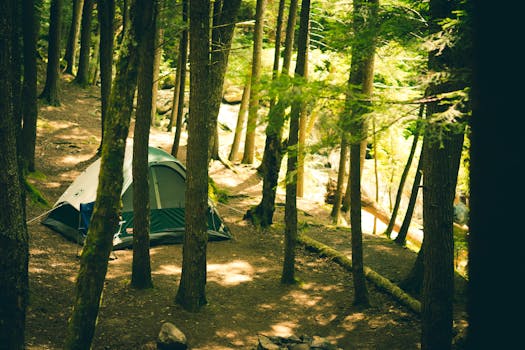
Free stock photo of forest, trees, adventure, camping
Choose Flat Ground
The most important thing to look for when searching for an optimal campsite is flat ground because it could mean the difference between a good night’s rest and waking up to nightmarish surroundings. You are more likely to achieve a comfortable night’s sleep in areas strewn with pine needles, sand, grass or dirt, rather than littered with rocks and roots. Established campgrounds will typically maintain level and safe sites to pitch your tent, often times with streams or meadows as a scenic backdrop. When you find a large and comfortable area, large enough for your tent, use a small rake or similar tool to brush away any sticks, stones or tree branches that might poke you while you sleep. If you do not have a rake, you can use your foot to clean your site of debris. Prior to setting up your tent, assess the condition of the ground by laying your sleeping bag or mattress over the area and testing the comfort.
Avoid Hills
Avoid setting up camp anywhere on a hill, if possible. Whether you’re on the top, bottom or middle of a hill, all of these locations pose a threat to your safety. Rookie campers might mistakenly believe that it’s a good idea to camp in a valley at the bottom of a hill because of the excellent protection from the wind and sun. However, if it rains you may wake up in a puddle of water or worse in a deadly flash flood. Sometimes there is no level ground and you may have to settle for slightly sloping ground. Be sure to position your head on the uphill slope with your feet pointed downhill. If you lie sideways along the slope, you will inevitably roll to one side of the tent, pressing your body into the tent wall material, creating the potential for getting wet from condensation.
Consider Sun Exposure
Always look for an area within close proximity to a shady spot. A tent positioned in direct sun will become sauna-like. Some tents can be damaged or suffer premature aging by the sun’s harmful rays, so always check for tent care instructions before venturing out into the wilderness.
Consider Wind Exposure
Look for a campsite with a natural windbreak. No matter where you’re camping, try to position your tent so the door is facing away from the wind for proper protection from strong gusts. It will be very difficult to get a good night’s rest if your tent is flapping in the wind all night long. Plus, if you’re positioned facing into the wind, your tent will feel drastically colder because of the poor insulation.
Be Close to Water
Some campers feel it is safer to camp near a water source in case they drain their supply of water. However, this may not be the safest choice. There are a couple of reasons for this.
1. Camping too close to a water course can be dangerous if there is rain and a flash flood washes your site away.
2. Camping too close to water can contaminate water supplies. Many established campsites are sited 100 feet or more from a water source.
With this in mind, keep your campsite close, but not too close, to a water source.
Camping in the Forest
Forested areas are popular sites for camping. Many developed tent sites will be flat and designed for tents. Backcountry sites will need a little more consideration. Most developed sites will have harder packed soils and will need sturdy stakes to keep the tent grounded. Forests have a diversity of soil types. Some soils are hard to penetrate with stakes and other soils are loamy and will not hold stakes well. These soil issues show up more in backcountry settings. Do a little research on forest soil types to be assured you have the appropriate stake.
Camping in the Snow
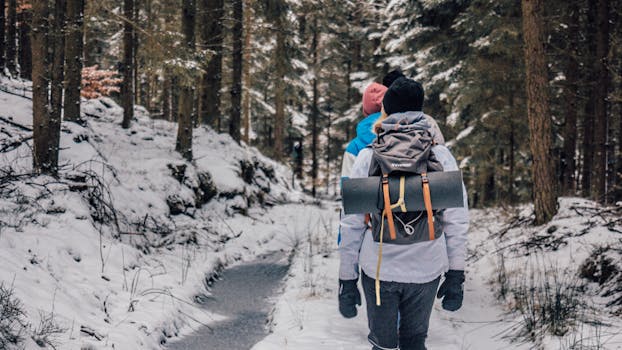
Two People Walking in Woods With Snow

When camping in the snow, if there is fresh deep snow, avoid choosing a campsite near trees laden with heavy snow loads which may drop off in wind or during warmer daytime temperatures. Additionally, in mountainous terrain, avoid bowls and slopes that are prone to avalanche. Stay well back in the trees and up slope from the bowl’s base. Once you find a suitable spot, use your snowshoes or skis to tamp down the ground to create a solid, firm surface. Winter weather conditions may vary from place to place, but it’s always safest to purchase a 4-season or winter tent for proper protection against snow and high winds in exposed tent sites. If you will be camping in deep snow, a snow stake can be a good accessory.
Don’t Leave Your Mark on the Land
In order for everyone to be able to appreciate Mother Nature’s gifts for many years to come, remember your environmental responsibilities. Dispose of your waste properly and do not leave any trace of your visit, on your campsite when you leave. As a general rule of thumb, don’t leave your “footprint” on the earth.

Wild Camping Tips and Kit List

The first rule of Wild Camping club is...  actually really simple! Leave No Trace: if you take it in, you carry it out. What is wild camp...